How to Pack Books Without Making Boxes Too Heavy
Keep books upright, supported, and liftable by using small cartons and short, balanced stacks.
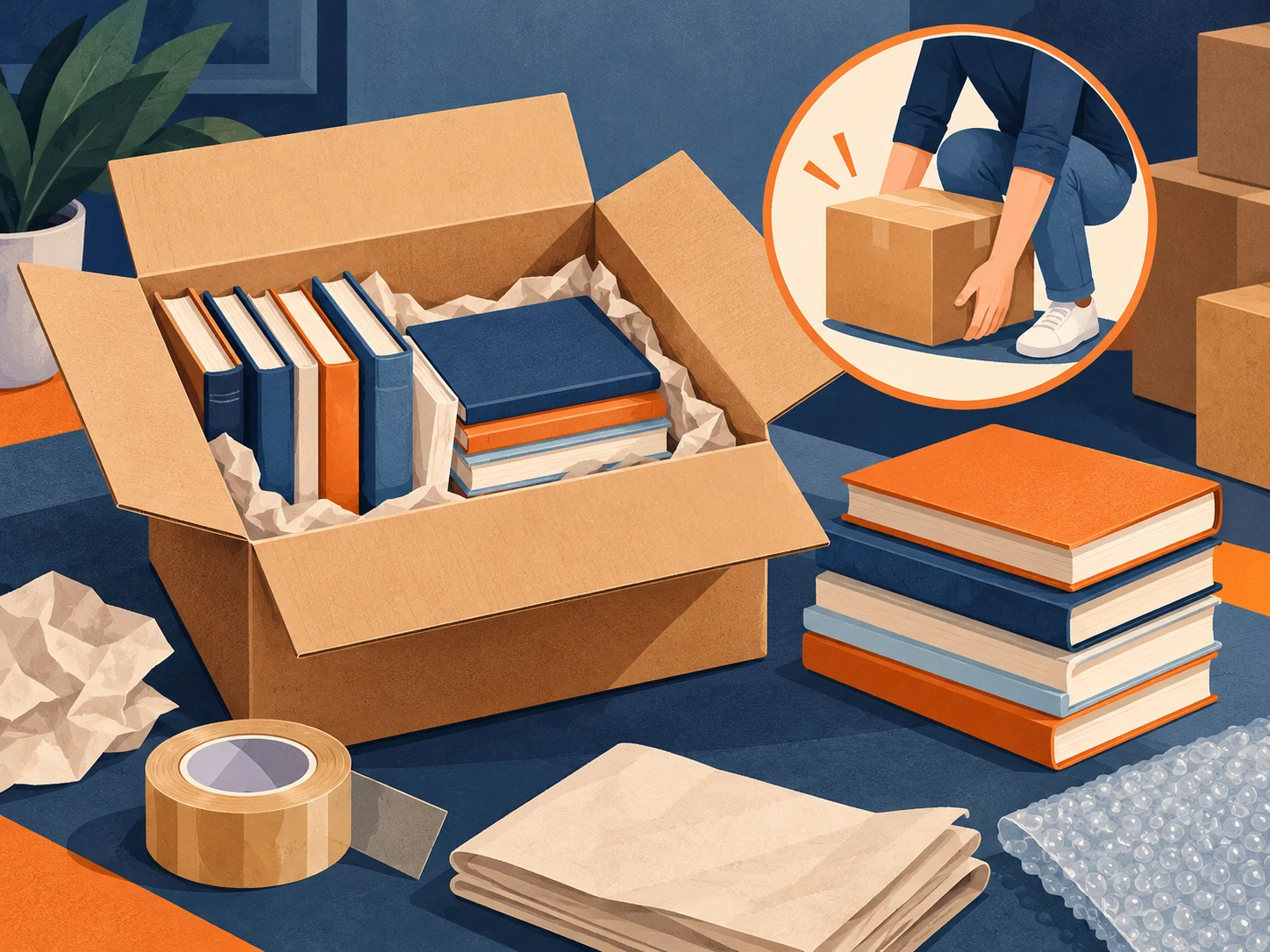
Choose small boxes before you start
Books are easy to underestimate because each one is small. A carton can look half full and still be too heavy to carry safely. Start with clean, sturdy small boxes. The BoxCount Planner small category is 12 x 12 x 12 inches, although the cartons you buy may vary. The important feature is a manageable footprint and a bottom that will not bow under the weight.
Use a second carton when the first one becomes awkward, even if there is visible room left. Two balanced boxes are easier to move than one overloaded box, and they are less likely to split when lifted from the floor. Reinforce the bottom seam before adding books, especially when reusing a carton.
Pack books upright, flat, or in supported rows
Books can be packed upright with their spines supported, flat in short stacks, or in a combination that prevents covers from bending into unsupported gaps. Avoid leaning a tall row against an empty side of the carton. The pressure can warp covers and lets the whole group shift when the box moves.
- Keep upright rows snug without compressing covers or forcing books into place.
- Use flat stacks for large or heavy volumes when the carton remains easy to lift.
- Place smaller books beside larger books only when the arrangement stays supported.
- Fill side gaps with crumpled paper so books do not slide during carrying.
- Leave a small cushion at the top instead of packing books against the flaps.
For valuable or delicate books, add a clean protective layer around the covers and keep moisture away from the carton. Do not use tape directly on a book cover. If a book has a loose jacket, remove or protect it according to the condition of the book and keep it with the correct volume.
Protect covers and pages
Dust jackets, glossy covers, and older bindings can scuff when they rub against one another. Use clean paper to separate surfaces or create a soft sleeve around especially delicate volumes. Keep books dry and away from liquids, damp basements, and boxes with a damaged bottom. The carton should be closed firmly without pressing the contents so hard that pages curl.
- Put heavier books at the bottom and lighter paperbacks above them.
- Keep books away from sharp tools, metal hardware, and unwrapped décor.
- Use small amounts of void fill to stop movement without crushing the row.
- Do not mix books with loose liquids, candles, or items that can leak.
- Mark boxes containing rare, signed, or especially delicate books so they receive appropriate handling.
If a collection is organized by shelf, keep that organization visible. Write the room, bookcase or shelf, and a broad range such as 'history — A through L' on the label. That note makes unpacking faster and avoids turning a sorted library into a new sorting project.
Distribute weight across the move
Book cartons should stay low in a stack and close to the floor of the moving vehicle when possible. Do not place a heavy book box on top of a fragile carton, and do not let the weight of one box crush a lower carton with a weak bottom. Use furniture or other stable surfaces to keep book boxes from sliding, but avoid creating a tower that can tip when the truck moves.
You can mix a few light items into a book box when they fit securely and do not leave books unsupported. Soft bookmarks, small linens, or light paper items may work. Avoid mixing bulky objects that create pressure points or make the carton harder to label and unpack.
- Keep the heaviest books low and the lighter volumes higher.
- Use short stacks or rows so the contents remain supported.
- Do not use standard cartons for a full collection unless the contents are unusually light.
- Separate book boxes from fragile glassware and liquids.
- Ask for help with a box that is manageable in weight but awkward on stairs or over a long carry.
Seal and label the box
Once the books are supported and the carton passes the lift test, add a thin top cushion and close the flaps without forcing them. Tape the center seam and reinforce the bottom if the carton will travel far or be handled repeatedly. Write BOOKS, the destination room, and a shelf or category note on two sides and the top.
A clear contents label prevents unnecessary opening during the move. If the books belong to different rooms, use separate cartons unless the mix is small and the destinations are clearly written. Keep labels factual rather than decorative; 'office — reference' is more useful than a color or nickname that only the packer understands.
Common book-packing mistakes
- Using a large standard box because the collection fills it quickly.
- Packing books against an unsupported gap where covers can bend.
- Putting heavy hardcovers on top of lighter paperbacks.
- Leaving side space unfilled so rows slide during carrying.
- Mixing books with liquids, sharp tools, or unwrapped objects.
- Failing to label a shelf or room, turning unpacking into a second inventory task.
- Lifting a full carton by the flaps or one side instead of supporting the bottom.
Plan book cartons with the calculator
Select the books level in BoxCount Planner to help the estimate account for a collection that needs more small cartons and packing material. The result also considers your home size, belongings level, fragile items, wardrobe clothing, and move distance. It is a planning range, not a count of individual titles. Use the first packed shelf to see whether the small-box mix matches your collection.
- Choose small, strong cartons and reinforce their bottoms.
- Pack upright or flat with every row supported.
- Protect covers and keep pages dry.
- Use paper to fill side gaps and leave a light top cushion.
- Lift from the bottom and split any box that feels awkward.
- Label the room, shelf, and broad contents range before loading.
Make unpacking easier for the next room
Book boxes are easiest to unpack when their labels preserve the shelf order. Use the room name, bookcase or shelf, and a broad range rather than a vague label such as 'miscellaneous books.' If several people are packing, agree on the same format before the first carton is sealed.
Keep the first box from each shelf accessible if you need a reference during unpacking. Load book cartons low and keep them away from damp areas, loose liquids, and cartons that could collapse. A little labeling and placement work now prevents a second sorting project at the new home.
Use the calculator for a personalized starting estimate. Exact needs vary, so adjust it after you take inventory.
Use the moving supplies calculator