How to Pack Shoes for Moving Without Crushing Them
Keep pairs together, protect shape and finishes, and choose between shoe boxes, moving cartons, and suitcases for the shoes you use.
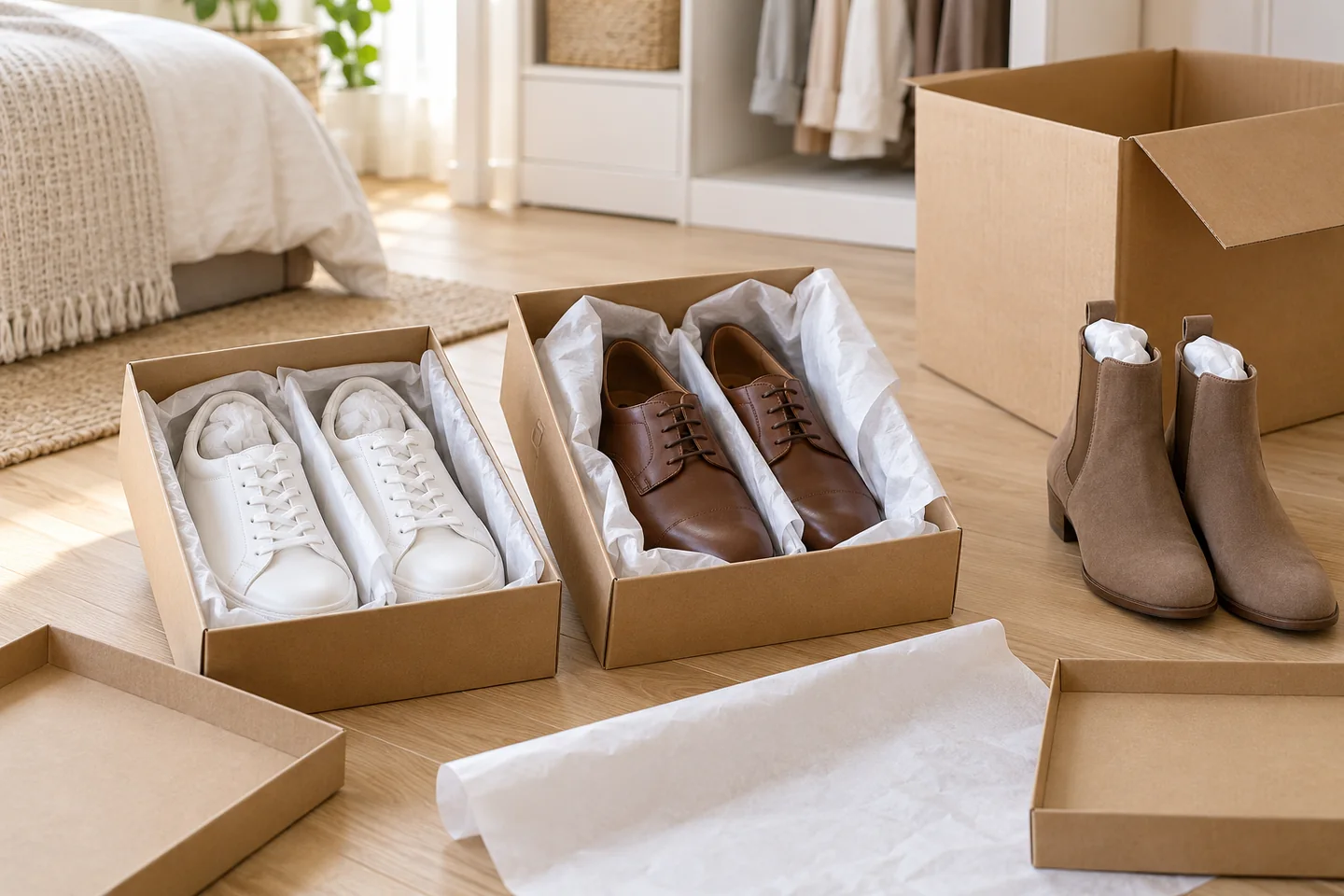
Sort pairs before choosing the containers
To pack shoes for moving, start with clean, fully dry pairs. Support the shape where needed, protect each shoe from contact and scuffs, and use a container that closes without pressing on the uppers. Keep moving-day footwear separate so it remains available after the rest of the closet is packed.
Gather shoes from the entryway, bedroom, garage, and seasonal storage. Match each pair and decide what you are keeping. Separate everyday sneakers, boots, dress shoes, and delicate or embellished pairs. That makes it easier to select protection before a carton fills with incompatible shapes.
Make a short list by person and group rather than writing every shoe model. For a shared bedroom, separate the two people's shoes during packing and use destination labels that make sense at the new home. Put donation pairs aside before measuring the containers you will need.
Clean and dry shoes before wrapping
Remove loose dirt and clean each pair using care instructions appropriate to its material. Leather, suede, fabric, and decorative finishes can require different products. Avoid applying a general cleaning mixture to every pair just because it works on one sneaker.
Let shoes and any cleaned removable parts dry fully before packing. Do not seal damp footwear inside a shoe box, plastic bag, or bin. If a pair is still drying when the rest of the closet is ready, keep it out and record it on the final packing list.
Check for grit or hard debris before bringing wrapping materials into contact with the shoes. Keep dirty work footwear separate from clean clothing and delicate pairs. A protective bag contains contact with other belongings, but it does not replace cleaning and drying.
Support the shape and protect the finish
Use suitable shoe trees, clean unprinted paper, or appropriate tissue to give structured shoes light internal support. Fill the toe area gently. Stop before the material pushes the upper outward or stretches the fit. Support a tall boot shaft without forcing a sharp fold into it.
Choose a clean, compatible layer around each shoe so buckles, heels, and soles cannot rub another shoe's finish. Give projecting or decorative parts their own space. Keep adhesive on the wrapping instead of placing tape directly on leather, fabric, or trim.
Printed paper can mark a surface, so use unprinted material where contact matters. If you are uncertain about a sensitive finish, follow the shoe maker's care and storage guidance. Preserve the dust bags and fitted inserts that came with delicate footwear when they are clean and usable.
Use original boxes when they still fit
Check the original shoe box for damage, moisture, or a weak lid. Put the protected pair inside without forcing it into an arrangement that bends the upper or presses a heel against the other shoe. Add appropriate separation and close the lid naturally.
Place individual shoe boxes inside a manageable moving carton when that suits the load. Support them so they do not slide, and arrange weight without crushing the lighter boxes. A fragile shoebox lid is not a platform for a heavy stack of boots.
Pack shoes without their original boxes
Use a sound carton that holds a manageable group of protected pairs. Line it with suitable material, arrange each pair without pressure, and add separation where soles, heels, or fittings could touch another shoe. Fill movement gaps without forcing a packed layer against the lid.
| Footwear | Useful protection | Packing decision | Check before closing |
|---|---|---|---|
| Everyday sneakers | Light support and individual wrapping | Keep pairs together in a manageable group | No dirty sole against a clean upper |
| Tall boots | Support for toes and shafts | Use a container that accommodates their shape | No forced folding or load flattening the shaft |
| Heels and dress shoes | Separate wrapping and space for projections | Keep away from heavier pairs | Heel and hardware cannot mark another shoe |
| Delicate or embellished pairs | Compatible tissue, dust bags, or fitted packaging | Use individual protection suited to the finish | Decorations and sensitive surfaces remain clear |
A container that looks roomy can become heavy once several pairs are packed. Check its load while you can still rearrange it. If the carton bows, a handle feels strained, or the shoes are being compressed to close it, split the group into another container.
Decide when a suitcase or bin makes sense
A suitcase can hold a small number of shoes when they fit without pressure and remain separated from clothing. Use clean shoe bags or suitable wrapping to contain contact. Check the suitcase's total weight and avoid letting rigid heels press into nearby contents.
For a plastic bin, inspect the container and lid, use clean dry footwear, and provide the same shape support and separation you would use in a carton. A hard shell does not stop a loosely packed pair from rubbing against another. Record the contents instead of relying on the bin's appearance to identify them.
For a hypothetical small collection, you might keep one everyday pair in the essentials bag, place a delicate pair in its own shoe box, and pack the remaining sturdy pairs in one carton if the weight and fit allow it. Your actual mix depends on the pairs and containers you have; the number of bedrooms is not a footwear inventory.
Label and unpack footwear in a useful order
Mark the destination room and the person who owns the shoes on visible sides. Add a note for delicate contents when handlers need it. Keep shoe cartons out from under heavy loads, and give essentials footwear a clear place in your moving-day bag.
At the new home, remove the packing materials carefully and check for loose accessories before discarding them. Inspect the pairs and give them an appropriate clean, dry storage space. If footwear will remain packed beyond the move, review its storage requirements rather than treating a short trip and extended storage as the same situation.
Use BoxCount Planner to organize the general carton and paper purchase, then adjust your shoe allowance after a trial pack. Keep existing shoe boxes on the inventory even when they sit inside a moving carton, so the outer box count is not confused with the number of pairs.
- Pairs are matched, sorted, and fully dry.
- Support preserves shape without stretching the shoes.
- Wrapping separates soles, fittings, and sensitive finishes.
- Original shoe boxes and outer cartons close without pressure.
- The packed weight remains manageable and labels identify the owner and room.
- Moving-day shoes remain outside the main packed load.
Use the calculator for a personalized starting estimate. Exact needs vary, so adjust it after you take inventory.
Use the moving supplies calculator