Moving Boxes vs. Plastic Bins: Which Should You Use?
Compare cardboard cartons, household totes, and rental moving crates by fit, handling, total cost, and the time you need to unpack.
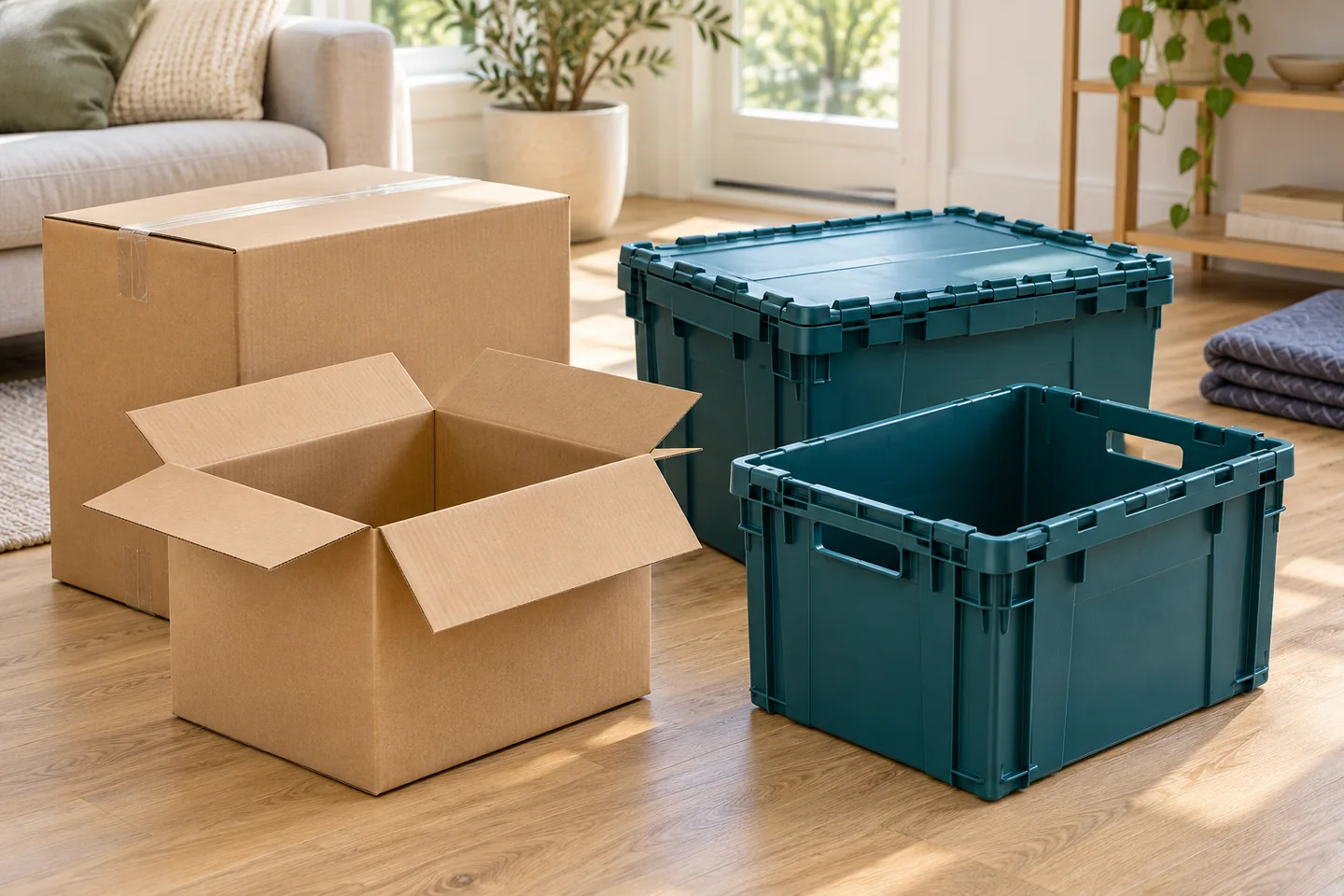
Start with the container you are actually comparing
When comparing moving boxes vs. plastic bins, choose by the items, handling route, and time you need the containers. Cardboard offers a range of shapes and can be kept until you finish unpacking. A suitable reusable moving crate can save assembly work, while a rental adds a return deadline. Many households can use a combination.
A household storage tote and a purpose-built moving crate are different products. Check the lid, handles, dimensions, condition, and manufacturer's stacking instructions for each. A thin tote with a loose lid should not be treated as equivalent to a rental crate designed to stack with matching crates.
The same distinction applies to cardboard. A dry moving carton with sound corners is different from a damaged retail box. Inspect containers you already own before counting them as usable supplies, and check any specialty packaging needed for screens, mirrors, or other awkward shapes.
Compare packing and handling before price
| Decision | Cardboard cartons | Plastic containers | What to check |
|---|---|---|---|
| Choice of shape | General and specialty cartons are available | Tote and crate dimensions vary by product | Internal space after cushioning |
| Assembly and closure | Usually require folding and suitable tape | Often have lids or attached closures | The instructions for that particular container |
| Stacking | Depends on carton condition, load, and support | Depends on compatible lids and base design | Stacking limits and stability when filled |
| After unpacking | Sound cartons can be flattened for reuse | Owned bins need space; rented crates need returning | Storage room or the collection deadline |
Test one container with a representative group of belongings. Check whether you can grip and carry it through the actual doorway or stair turn. Handles are useful only when the loaded container remains manageable. A large bin filled with books can be awkward even if its lid closes neatly.
Fragile contents still need suitable separation, cushioning, and movement control inside either type. A rigid outer wall cannot keep loose glasses from touching each other. Use the appropriate packing method first, then judge whether the protected contents fit the container.
Work out the total cost for your dates
For cardboard, add the cost of the required sizes, tape, delivery, and specialty cartons. Subtract sound boxes you can reuse or obtain free. For owned plastic bins, compare the purchase cost with the space and future use you have for them. For rentals, request a quote covering the complete period from packing through unpacking.
Ask which charges apply to delivery, pickup, a different return address, extra days, missing lids, and damaged containers. Check whether the minimum order includes more crates than you need. Keep refundable deposits separate from the final expense, while allowing for the cash required upfront.
Use the same scope on both sides of the comparison. A carton price without delivery and a crate package with collection included are not directly comparable. Also check whether cushioning, labels, or a dolly are included or must be obtained separately.
Check return logistics for rental crates
Confirm where the crates must be returned before reserving them for a move between cities. For example, U-Haul describes returning its Ready-To-Go Boxes to the location where they were collected. A different provider may offer delivery and collection, but its service area and dates need to cover both ends of your move.
Allow time for packing before moving day and unpacking afterward. If keys, access, or your moving date may change, ask how extensions work. Keep essentials in a separate container so they remain accessible while you empty the rental crates and prepare them for return.
Write the agreed dates, locations, count, and return condition in your moving notes. Check the count at delivery or pickup and again before returning the crates. Resolve a missing lid or damaged container while you can still identify which load it belonged to.
Plan for moisture, storage, and reuse
Keep cartons dry and replace any that soften or lose their shape. For a plastic bin, check whether the manufacturer actually claims a seal or weather protection. An ordinary fitted lid does not establish that the contents are protected from water entering through gaps or openings.
Pack only clean, dry belongings. Closing damp shoes or textiles inside a bin leaves the moisture with them. If the containers will stay in storage, choose the location and packing method for the contents as well as the outer material, and keep access to anything needed before the rest is unpacked.
Consider the next use before buying a batch of identical totes. Measure the shelves or storage area where you expect to keep them. Sound cardboard can be offered to another mover, while rented crates go back into the provider's system. An environmental comparison would need information about actual reuse, transport, and disposal; material alone does not establish which option has the lower impact.
Build a mixed container plan
Assign containers to item groups instead of replacing every carton with one standard bin. Compact cartons may suit books, matching crates may suit some everyday belongings, and fitted packaging may still be needed for pictures or a TV. Check each assignment with a trial pack and the handling instructions.
BoxCount Planner estimates carton categories and general supplies. If you substitute plastic containers, record that choice separately rather than assuming one bin equals one suggested carton. Adjust the cardboard quantities for the groups you have reassigned, while retaining the paper and cushioning those belongings still need.
- Compare internal dimensions and closure instructions for the specific products.
- Test the packed weight, grip, and route.
- Include the full period and all applicable charges in a rental quote.
- Confirm pickup and return arrangements at both ends of the move.
- Keep specialty packaging and protective materials on the list.
- Check the plan again after the first representative load is packed.
Use the calculator for a personalized starting estimate. Exact needs vary, so adjust it after you take inventory.
Use the moving supplies calculator