Where to Get Free Moving Boxes That Are Worth Using
Find local box exchanges and pickup opportunities, inspect used cartons, and collect the sizes your move actually needs.
Where to look for free moving boxes
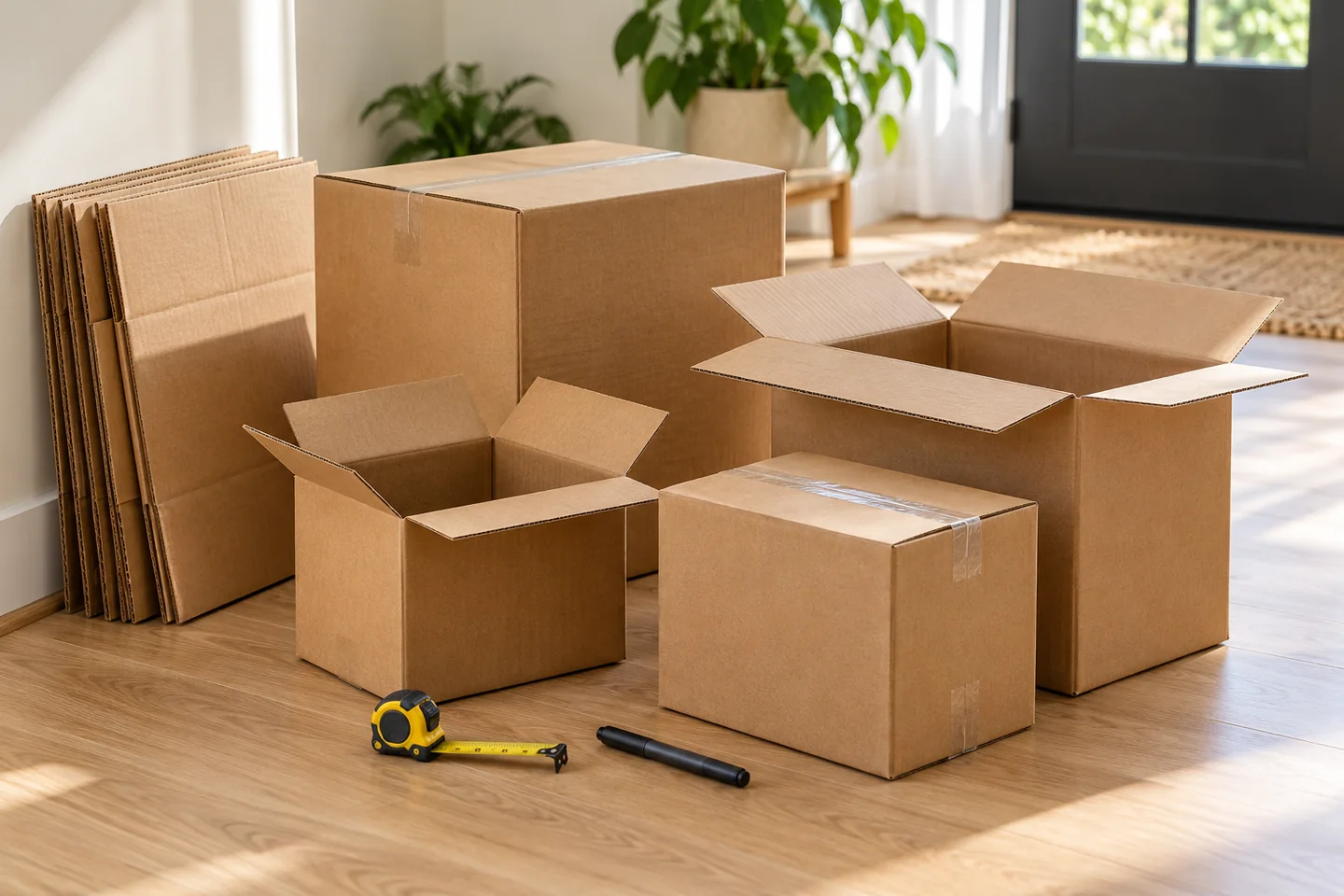
Start with people who have just moved, neighborhood gifting groups, local businesses, and box exchanges when deciding where to get free moving boxes. Ask about condition and size before collecting them. Availability changes locally, and a free carton is useful only if it can hold the belongings you need to move.
Friends, neighbors, and colleagues can be a convenient first stop. Someone finishing a move may have several matching cartons and know what they held. Ask whether the boxes can close properly and whether any became wet or damaged. You can arrange collection as they unpack instead of taking an entire mixed pile at once.
Search local Buy Nothing groups, Freecycle, and neighborhood classifieds for moving boxes. Try free moving boxes near me with your town or neighborhood, then check the listing's date and pickup area. A listing may already be claimed. U-Haul Customer Connect also hosts box and supply exchanges, including both giveaways and items for sale.
| Source | What to ask about | How to approach it | Check before traveling |
|---|---|---|---|
| Recent movers | Matching cartons and specialty boxes | Ask neighbors or people you know | Condition, sizes, and pickup date |
| Local gifting groups | Individual boxes or bundles | Search current posts or make a specific request | Whether the offer is still available |
| Bookshops and offices | Compact cartons and paper boxes | Ask staff whether suitable empties can be released | Closure, strength, and business permission |
| Other local retailers | Cartons from incoming stock | Call before visiting and ask about collection | Cleanliness, useful dimensions, and complete flaps |
Ask businesses before taking their cartons
Bookshops, offices, and other retailers are places to ask, rather than guaranteed sources. Staff may need cartons for returns or have a recycling agreement. Call first, explain the sizes you need, and ask whether there is a collection time that suits them. Get permission before removing anything from a loading area or recycling point.
Food and drink retailers require a closer inspection. Reject boxes with spills, food residue, strong odors, moisture, or signs of pests. Open-topped trays and boxes with missing flaps may be unsuitable for stacking and closing, even when they look sturdy. Keep a specialty packing need separate from the hope of finding a random carton that fits.
What to confirm before collecting boxes
Ask for the approximate number and dimensions, a photo when useful, and whether the cartons are assembled or flattened. Confirm that the offer is free and whether taking the whole bundle is required. Knowing this before you travel helps avoid a pickup that fills your vehicle with oversized or unusable boxes.
Use the platform's normal messaging process and agree on a practical collection arrangement. Bring a way to keep flattened cartons dry and secured during the trip. A damp pickup or a stack left exposed to rain can undo the benefit of finding sound boxes.
- Confirm the offer is still available and the owner has agreed to the pickup.
- Ask whether the boxes have complete flaps, lids, or any required inserts.
- Check whether old labels or contents markings need to be removed or covered.
- Agree on how many you will take and when you will collect them.
- Inspect the actual cartons before adding them to your usable count.
Which used boxes to accept or reject
Inspect the base, seams, sides, and corners. A carton should be dry and hold its shape without soft patches, crushed edges, tears, or a separating bottom. Fold and close it to check that the flaps meet. Look inside as well as outside; a neat exterior can hide residue or damage.
Remove loose old tape where it prevents the carton from closing, then seal sound boxes with suitable packing tape. Extra tape does not restore water-damaged cardboard or make a torn corner sound. Reject doubtful cartons for the moving load instead of assigning them heavy or fragile contents.
A paper box with a separate lid also needs a plan for securing that lid. Handles and openings should not expose small items or weaken the packed load. Test a carton with the intended contents and check whether its weight is manageable before repeating that arrangement across a whole batch.
Match collected boxes to your packing list
Sort accepted boxes by actual dimensions and intended contents. Retailers use different size names, so write the measurements on your list. Reserve compact cartons for dense items such as books, and larger cartons for light bulky belongings. Leave adequate space for protection around fragile pieces.
Suppose your packing plan calls for 12 compact cartons and you collect eight suitable ones. You still need four compact cartons, even if you also brought home ten large boxes. This is a hypothetical inventory example; count by useful type before comparing the total with your estimate.
Store collected cartons flat in a dry area where you can inspect and retrieve them. Group compatible sizes together. Recheck their condition before assembly if they have been stored for a while, and keep rejected cartons out of the packing area so helpers do not use them by mistake.
When buying a box is the better option
A TV, large mirror, framed picture, or hanging wardrobe may need a fitted carton and compatible protection. Check the item's measurements and the packaging instructions before improvising from a retail box. An available carton that forces a fragile item against its sides can create more work than buying the right packaging.
Consider travel and time as well. Several distant pickups may be inconvenient when moving day is close. Check whether your mover supplies any cartons or offers reusable packaging before adding another shopping trip. Ask about charges, deposits, and return conditions rather than assuming a supplied box is free.
Track collected boxes and buy what is missing
Keep one list with box type, planned quantity, usable boxes available, and boxes still needed. BoxCount Planner lets you record supplies already available and review remaining quantities. Inspect the actual boxes before entering them; the calculator cannot judge their condition or fit.
- Contact sources before traveling or taking boxes.
- Confirm price, dimensions, availability, and collection arrangements.
- Reject wet, contaminated, torn, or structurally weakened cartons.
- Count usable boxes by type instead of relying on one total.
- Keep specialty packaging on its own shopping line.
- Offer sound empty boxes onward after unpacking, subject to the local group's rules.
Use the calculator for a personalized starting estimate. Exact needs vary, so adjust it after you take inventory.
Use the moving supplies calculator