Protect Fragile Items With Less Waste
Reuse sound cartons and clean cushioning where they suit the job, while giving delicate belongings the protection their shape requires.
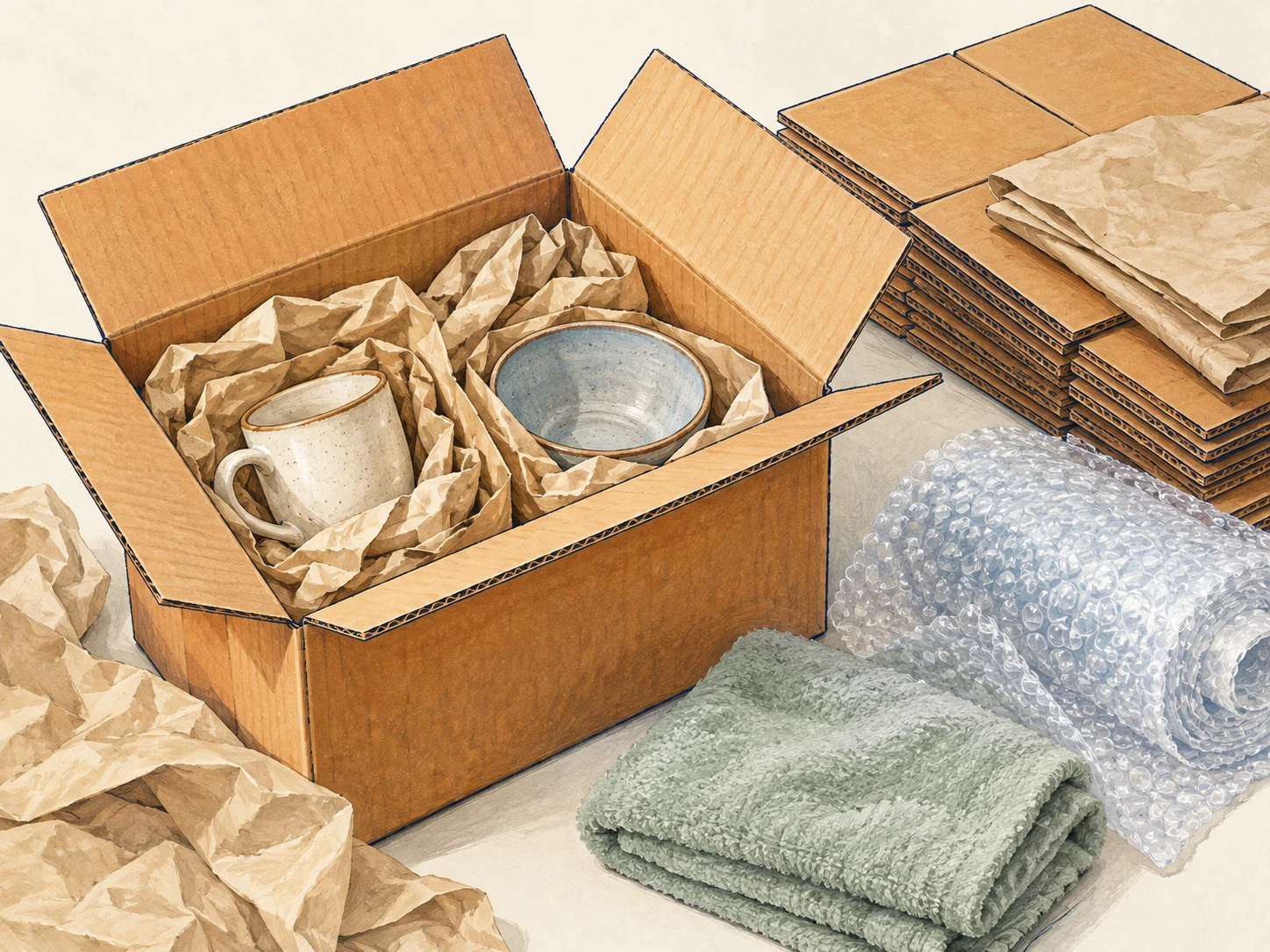
Use materials you have already checked
To protect fragile items with less waste, inspect your existing packing materials before buying more. Keep clean, intact paper, suitable cushioning, and sturdy cartons. Reject materials that have lost their protective function. Reducing the amount you throw away should still leave each object separated, supported, and stable inside its box.
Begin with a small group of similar belongings, such as everyday cups. Pack one carton and note what you actually used. A trial tells you more about the next supply purchase than wrapping everything in the thickest material available. The related fragile-items guide covers individual packing techniques in more detail.
Sort supplies into usable, conditional, and damaged
Lay out saved cartons, paper, cushioning, and cloths where you can see their condition. Dry paper that still crumples into a useful cushion can work again. Intact bubble cushioning may be reused when its air cells still provide support. Keep molded inserts with the item they were designed to protect so they do not become anonymous scraps.
- Usable: clean wrapping paper, sound cartons, and intact fitted inserts suited to the item.
- Conditional: clean towels or clothing that can fill gaps without pressing on delicate parts.
- Damaged: damp or crushed cardboard, dirty fabric, burst cushioning, and materials carrying grit or odors.
A carton that has carried several loads may still look tidy while its corners or bottom have weakened. Inspect those areas before using it for breakables. Keep rejected supplies out of the packing station so another helper does not mistake them for approved materials.
Give each material a specific job
Use a clean, non-abrasive layer where an object's surface needs separation from surrounding material. Add suitable cushioning where it needs protection from movement or impact. Fill gaps so the wrapped item stays in position. These jobs can require different materials; a smooth sheet around a bowl does not by itself stabilize a large empty carton.
Crumpled paper is useful for filling irregular spaces, while fitted inserts support the shapes they were made for. Clean cloth can supplement gap fill when it stays in position. Keep printed or dyed materials away from surfaces that may mark, and check the item's care instructions if you are unsure about direct contact.
Pack one representative fragile carton
Choose a sound small or medium carton that leaves room for the selected protection. Build a cushioned base, wrap pieces separately, and arrange them so hard surfaces cannot touch. Fill spaces around the sides and between objects. Add the top protection before closing the flaps without forcing them down.
Support the carton and move it gently enough to notice loose contents without shaking the objects. If anything slides or rattles, open it and correct the arrangement. Check that the weight is manageable before sealing. Record which materials worked so you can prepare the rest of that group consistently.
Use towels where you can retrieve them easily
A clean towel may fill a gap around an already protected item, but wrapping every small object in household linens can create a different problem at arrival. You may need the towels while the fragile boxes are still stacked. Keep first-night towels separate and record any linens used in ordinary cartons on the contents note.
Check fabric for hard zips, buckles, buttons, or trapped grit before putting it near a delicate surface. Keep cloth dry. For an object with a thin stem or projecting handle, choose protection that supports that feature instead of assuming a thick blanket makes the whole shape secure.
Keep specialist packaging for specialist items
Screens, unusually shaped ceramics, mirrors, and valuable artwork can need fitted packaging or specialist help. Keep original inserts when they are intact and appropriate for the item. Check the manufacturer's instructions before substituting loose cloth or wrapping material around a screen or sensitive finish.
If an item is traveling as a parcel rather than in the household moving load, use the carrier's packaging instructions. Parcel systems involve different handling, and some breakables need double boxing. Do not reduce required cushioning to meet an informal waste target. Avoiding an unnecessary purchase is useful; underpacking a delicate object can leave it damaged.
Buy the missing protection after the trial
List the gaps your trial revealed: more clean paper, a fitted mirror carton, replacement corner protection, or additional cushioning for stemware. Buy for those gaps. Keep enough material for fragile belongings still in daily use, such as the last kitchen glasses, so they receive the same attention as the first packed boxes.
Use BoxCount Planner's fragile-items input for an initial supply range, then compare it with the materials you can actually reuse. The calculator cannot inspect saved paper or count the intact inserts in your cupboard. Check their condition yourself before reducing a purchase.
Sort packaging as you unpack
Set aside clean reusable paper and cushioning before it becomes mixed with household trash. Check each sheet for small accessories or loose parts. Flatten sound cartons only after confirming they are empty, then keep materials dry for reuse or offer them to someone preparing a move.
Check your local council, municipality, or waste service for collection rules. Plastic films and bubble cushioning may need a separate drop-off route and should not be assumed suitable for the household recycling bin. A recycling symbol alone does not confirm local acceptance. Separate damaged materials according to the rules where you live.
Before sealing a reused carton
- The carton is dry, sound, and suitable for the contents.
- Every fragile piece has its own protection and no hard surfaces touch.
- Cushioning supports vulnerable parts and still holds its shape.
- Side and top gaps are filled without compressing the objects.
- The closed carton is stable during gentle handling and manageable to carry.
- The label identifies fragile contents, their destination, and any linens packed with them.
Use the calculator for a personalized starting estimate. Exact needs vary, so adjust it after you take inventory.
Use the moving supplies calculator