How Much Bubble Wrap Do I Need for Moving?
Plan bubble wrap from your fragile-item volume, roll size, wrapping method, and move conditions, then refine the range as you pack.
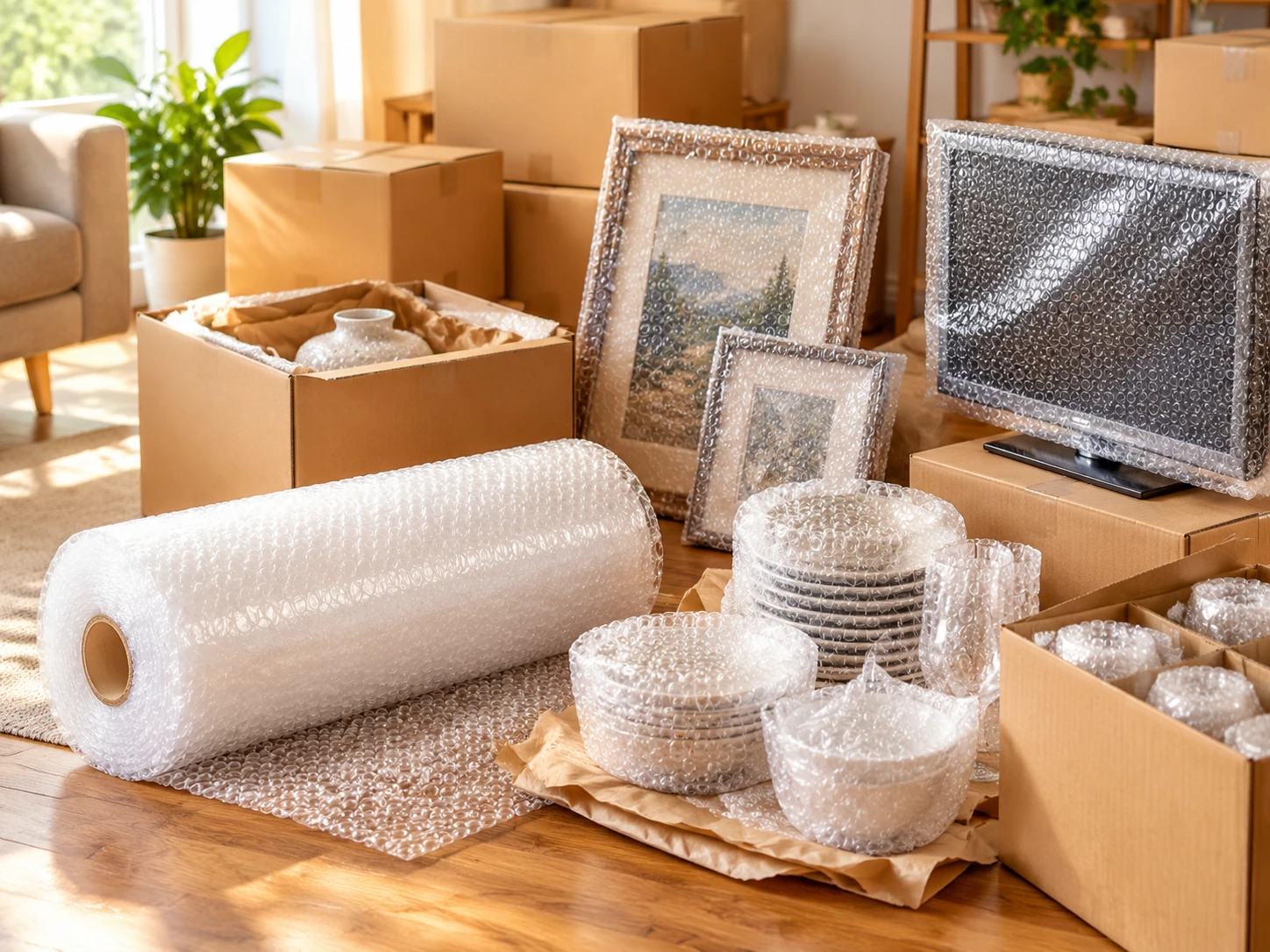
Turn measured wrap lengths into a roll count
Trial-wrap a representative item using the protection it needs. Measure the cut length, including every layer and overlap, then repeat for different shapes. Add those lengths across your inventory. Rolls needed = round up (total measured cut lengths plus a chosen reserve, divided by roll length). Compare rolls of the same usable width.
BoxCount's roll unit is 12 inches wide by 50 ft long, approximately 30.5 cm by 15.2 m. A wider object may need a wider roll or additional cuts, so length alone can understate the purchase. Keep fitted foam, corner protection, packing paper, and box gap fill on separate lines of your list.
There is no single roll count
The answer to how much bubble wrap you need for moving starts with the volume of fragile items, not the size of your home alone. A small apartment with a full glassware cabinet may use more wrap than a larger home with few breakables. Count the pieces you are keeping, note their shapes, and allow room for individual wrapping, box padding, and gap filling.
What changes the amount you buy
- Fragile-item volume: dishes, glassware, décor, mirrors, artwork, and electronics all consume protection differently.
- Item type: a plate is easier to group than a stemmed glass, framed print, or irregular sculpture.
- Roll size: compare both width and length. A wide roll may wrap large pieces faster, while a narrow roll can be easier around small objects.
- Wrapping method: individual wrapping and extra layers use more material than loose grouping, but they also create a more stable pack.
- Box size and padding: large boxes need more paper or other void fill so wrapped items cannot slide.
- Distance and handling: a long-distance move or storage period may justify more conservative protection and sturdier boxes.
The number of rolls is therefore a result of your packing system. A useful estimate separates items that need bubble wrap from items that are better served by clean packing paper, corner protection, moving blankets, or a combination.
Bubble wrap versus packing paper
Packing paper is useful for wrapping dishes, glasses, bowls, and many smooth household items. It fills small gaps, layers easily, and can cushion the inside of a box. Bubble wrap adds a thicker air cushion around pieces that are more vulnerable to impact or surface contact. It is often useful for especially delicate glass, electronics, artwork, and items with corners that need separation.
- Use clean paper for individual dishes, glassware, and light gap filling when the item shape allows it.
- Use bubble wrap around delicate surfaces, corners, electronics, artwork, and pieces that need more impact separation.
- Do not wrap every object in several layers by default. Match the material and thickness to the item and the move.
- Use paper or another suitable void fill around wrapped items so they cannot rattle; bubble wrap alone does not stop an empty box from shifting.
Dishes and glassware need space
Wrap plates individually or in small groups with paper, then add bubble wrap where the item is especially delicate. Place plates on edge in a padded box rather than building a tall, unsupported flat stack. Wrap glasses around the bowl, rim, and stem, and keep hard surfaces from touching. A medium or small box that stays liftable is usually easier to protect than a large carton packed with glass.
Electronics and artwork use a different layer plan
For electronics, protect screens and finished surfaces from scratches before adding cushioning. Keep cables and small parts in labeled bags, and use a box that leaves padding around the item without allowing it to float. A television may need fitted packaging or a purpose-sized box; select TV in BoxCount Planner so it is included as a special handling item rather than treating it like ordinary glassware.
Artwork needs protection for the face, corners, frame, and edges. Use clean layers that will not rub against the surface, add corner protection where appropriate, and choose a carton or crate that supports the piece. Bubble wrap can be an outer cushion, but it should not be the only plan for valuable or unusually delicate artwork. Measure first and keep the piece upright when the format calls for it.
Wrap first, then fill the box
A good wrapping technique has three jobs: separate surfaces, cushion the item, and prevent movement. Wrap on a clean surface, cover vulnerable edges and corners, and secure the material without crushing delicate parts. Then prepare the box with a bottom cushion, place heavier stable items low, and fill every meaningful gap. The box should close without pressure and remain comfortable to lift.
| Box | Common dimensions | Good for | Weight note |
|---|---|---|---|
| Item group | Typical protection focus | Useful material mix | Packing note |
| Dishes | Edges and contact points | Paper plus selected bubble wrap | Pack on edge; fill top and side gaps |
| Glassware | Rims, bowls, and stems | Individual paper layers and bubble wrap | Separate pieces and test for movement |
| Electronics | Screens, corners, and finished surfaces | Surface protection, bubble wrap, and firm padding | Keep accessories labeled and box stable |
| Artwork | Face, frame, corners, and edges | Clean layers, corner protection, and outer cushion | Measure first; avoid surface rubbing |
Room-by-room planning makes the estimate usable
Do not buy one large roll and hope it covers the whole move. Walk room by room and mark the fragile categories. In the kitchen, count plates, glasses, serving pieces, and appliances. In the living room, include framed artwork, lamps, décor, and media equipment. In bedrooms, note mirrors, lamps, and delicate personal items. In an office, separate monitors, computers, and small accessories. Storage areas often contain the awkward pieces that need more material than their count suggests.
- Kitchen: group by shape and use small or medium boxes with enough room for cushioning.
- Living room: measure artwork, mirrors, lamps, and electronics before choosing a box.
- Office: keep screens and accessories together by device, with cables labeled separately.
- Storage and garage: do not assume irregular décor or tools will fit a standard wrapping pattern.
- First night: keep medication, chargers, and essentials outside the wrapped fragile load so they remain accessible.
Distance, weather, and storage matter
A local move may involve less time in transit, but fragile items still need stable boxes and filled gaps. Long-distance moves add more loading, unloading, stacking, and waiting. Use sound cartons, choose protection that will not shift, and consider extra outer cushioning for pieces that will be handled repeatedly. Weather also matters: keep cardboard and wrapping materials dry, avoid sealing damp items, and do not let packed cartons sit exposed to rain or condensation.
For storage, protect against dust and contact, but do not trap moisture inside a sealed package. Keep labels readable, store spare wrap in a dry place, and leave enough access to inspect or retrieve the pieces you may need first.
Buying and storage mistakes to avoid
- Buying by home size alone and ignoring the actual volume of fragile items.
- Comparing rolls by price without checking width, length, or bubble size.
- Using bubble wrap as void fill while leaving wrapped items free to slide.
- Overwrapping everything and then running short for artwork, electronics, or late discoveries.
- Using newspaper or dirty material directly against surfaces that can stain or scratch.
- Packing damp items or storing rolls where heat, moisture, or crushing damages them.
- Filling a large box with fragile items because it seems efficient; extra space requires extra stabilization.
- Treating a calculator range as a guarantee instead of revising it after the first room.
How BoxCount Planner changes the estimate
For bubble wrap, the current planner changes the quantity when you adjust fragile items, select artwork or a TV, or change moving distance. Books change small-box and tape quantities; they do not directly add bubble wrap or packing paper. Home size and belongings level change the ordinary box mix but do not automatically scale the bubble-wrap result, so check your measured fragile inventory as well.
As a reproducible example, the default scenario starts at 1-1 rolls. Select average fragile items, add a TV, and choose a long-distance move, leaving artwork unselected: the result becomes 2-2 rolls of the 12-inch by 50-ft size. The model now ties protection to carton demand, kitchen and fragile inventory, and selected specialty items. These are planning allowances, not tested packing requirements. Compare them with measured cuts and each item's own packaging instructions.
- List fragile items by room and group them by shape.
- Check roll width and length before comparing prices.
- Choose paper, bubble wrap, or both based on the item's surface and vulnerability.
- Cushion the bottom, wrap pieces individually, and fill movement gaps.
- Select fragile items, artwork, TV, and distance in BoxCount Planner when they apply.
- Pack one room, compare actual usage, and revise the remaining shopping list.
- Keep spare wrap dry and accessible until the final fragile box is sealed.
Ready to turn your inventory into a supply range? Use the BoxCount Planner calculator, then refine the result with the first room you pack.
Use the calculator for a personalized starting estimate. Exact needs vary, so adjust it after you take inventory.
Use the moving supplies calculator