How Much Packing Paper Do I Need for Moving?
Estimate wrapping and gap fill separately, test a representative box, and turn your paper count into a practical purchase.
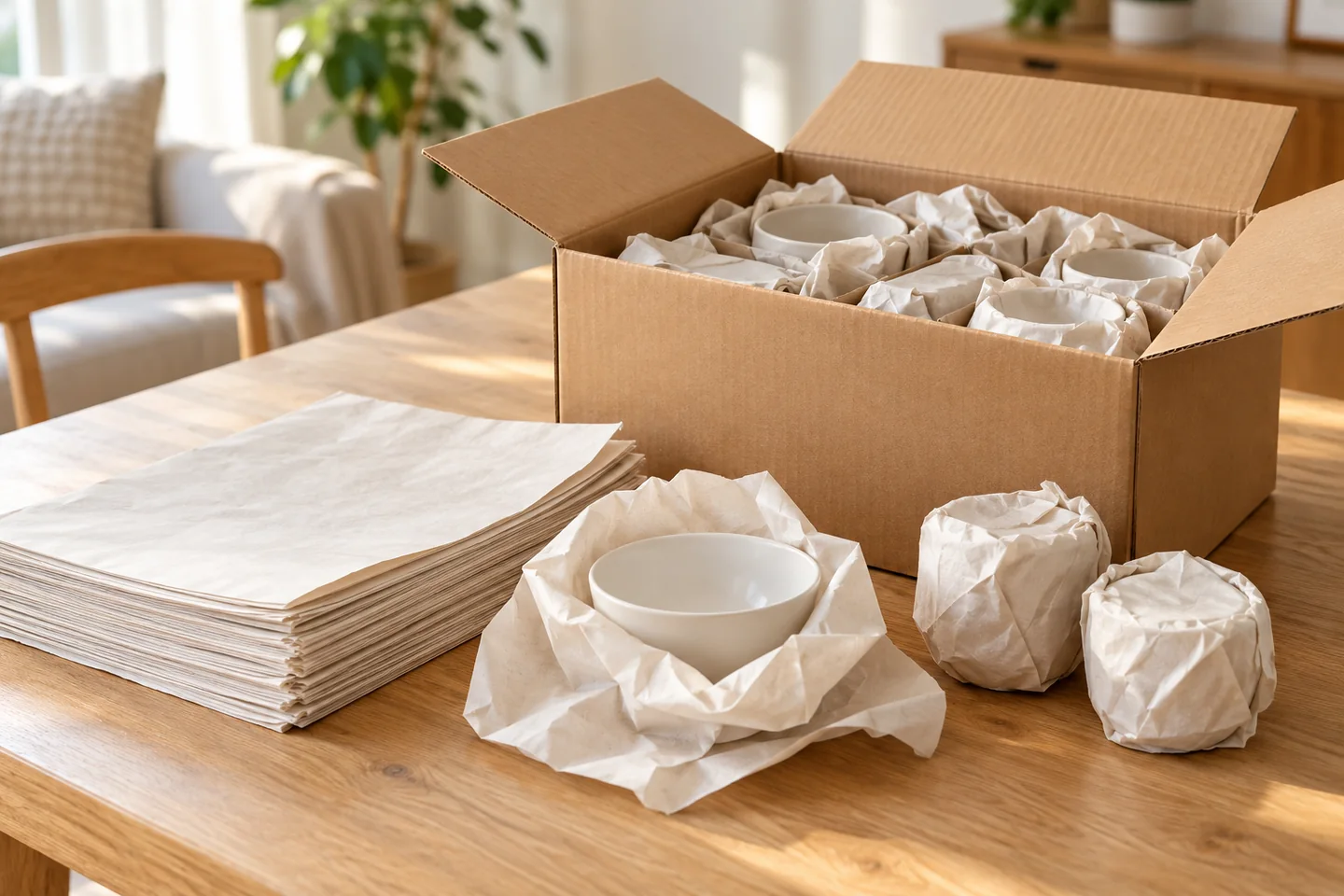
Start with the items you need to wrap
To work out how much packing paper you need for moving, count the belongings that need wrapping, test the paper used in a representative carton, and include the paper used to fill gaps. Convert the result into the actual pack size sold by your supplier. Bedrooms alone cannot tell you how many dishes, ornaments, or glass pieces you own.
Begin in the kitchen and dining area. Count plates, bowls, mugs, glasses, serving pieces, and fragile pantry containers you intend to keep. Then check shelves, cabinets, and storage for ceramics and small decorative objects. Record groups separately: a set of dinner plates and a collection of handled mugs can consume paper differently.
Leave out belongings that use a different packing system. A TV with fitted inserts, a mirror in a protective kit, and an appliance in its intact original packaging do not belong in the same paper allowance as everyday cups. Write their protection needs on a separate line so they remain visible when you shop.
Count wrapping, cushioning, and void fill separately
Paper has several jobs inside a carton. A clean sheet separates an object's surface from nearby objects. Crumpled sheets can form a cushioned base or fill irregular gaps. The material at the sides and top helps keep the wrapped contents in position. A count that covers wrapping alone misses those other uses.
| Paper use | Where it goes | What to record | What changes the amount |
|---|---|---|---|
| Individual wrapping | Around each object | Sheets used for a representative group | Object size, projections, and sheet dimensions |
| Base and top | Below and above the contents | Sheets used in each test carton | Carton footprint and required cushioning |
| Gap filling | Between objects and along the sides | Extra sheets added to stop movement | Item arrangement, dividers, and box fit |
Include the padding actually used in your test. If fitted dividers or another suitable material fill part of the space, do not add a second allowance for paper in that same space. Keep each object's required protection intact while checking where the paper is going.
Test a representative box before buying more
Set aside a counted stack of sheets from the product you plan to use. Pack one manageable carton of similar items, following the objects' care requirements. Wrap pieces separately, cushion the carton, and fill the remaining movement gaps. Count what is left in the stack and subtract it from what you started with.
Note how many objects fitted, the carton dimensions, and the sheets consumed. Include paper cut into smaller pieces as fractions of a sheet if that makes the record easier. Close the flaps without forcing them, support the carton, and check gently for loose contents. Correct movement before treating the trial as finished.
Repeat for a substantially different group, such as mugs after plates. Multiply a trial only across comparable objects and cartons. A loosely filled box of ornaments is a poor basis for estimating a tightly arranged set of plates. Update the count after another packing session if the remaining belongings differ.
Convert sheets into pounds and packs
Suppliers sell paper by sheet count, weight, or roll size. Check the listing for sheet dimensions and the approximate number of sheets in a pack. A pound of smaller or heavier paper does not provide the same number of sheets as a pound of another product. Use the supplier's stated yield when converting between sheets and pounds.
Check the units in your shopping list too. BoxCount presents packing paper in 10 lb units; another retailer may sell a different pack weight. Compare total paper weight and product specifications before translating the planner's quantity into a retailer's number of bundles.
A worked example for a two-bedroom move
Imagine a two-bedroom household whose trial packing suggests 90 sheets for plates and bowls, 120 for mugs and glasses, and 60 for small ceramics. The household records another 90 sheets for bases, tops, and gaps. These invented figures illustrate the arithmetic; they are not an average requirement for a two-bedroom home.
- Add the recorded uses: 90 + 120 + 60 + 90 = 360 sheets.
- Subtract 60 clean sheets already available: 300 sheets remain to obtain.
- For a hypothetical product containing 200 usable sheets per pack, divide 300 by 200: 1.5 packs.
- Round up to two packs. The remaining 100 sheets provide room for later adjustments; whether that is enough depends on the unpacked inventory.
Replace every example figure with your own count and the product's actual yield. If the first two cartons use more paper than the trial predicted, revise the remaining allowance. Avoid adding a fixed percentage automatically when a second trial can explain the difference.
Know when paper is not enough
Thin stems, projecting handles, screens, and large flat glass surfaces need a protection plan suited to their shape. Extra sheets cannot correct an unsuitable carton or a vulnerable point pressed against its wall. Use fitted protection or suitable cushioning where the object requires it, and ask a specialist about unusually delicate or valuable pieces.
Keep paper clean and dry, and avoid printed or dyed sheets against surfaces that can mark. Check reused material for grit and hard debris. For an item sent through a parcel carrier, follow that carrier's packaging instructions; a household moving estimate does not establish shipping compliance.
Update your moving supplies checklist
Use BoxCount Planner for an initial supply range, then edit planned quantities as your packing records improve. Enter the usable supplies you already have so the shopping list shows what remains. The calculator cannot inspect saved paper or know exactly how you wrap each glass.
- Count the groups that need individual wrapping.
- Record wrapping, base, top, and gap-fill paper without double counting.
- Test different item groups when their shapes or cartons differ.
- Check the supplier's sheet dimensions, pack weight, and yield.
- Subtract usable paper already available and round up to the sale format.
- Reserve supplies for the dishes and glasses still in daily use.
Use the calculator for a personalized starting estimate. Exact needs vary, so adjust it after you take inventory.
Use the moving supplies calculator