How to Pack Lamps for Moving: Bases, Shades, and Bulbs
Separate removable lamp parts, protect each material, and choose cartons that support the base and shade without pressure.
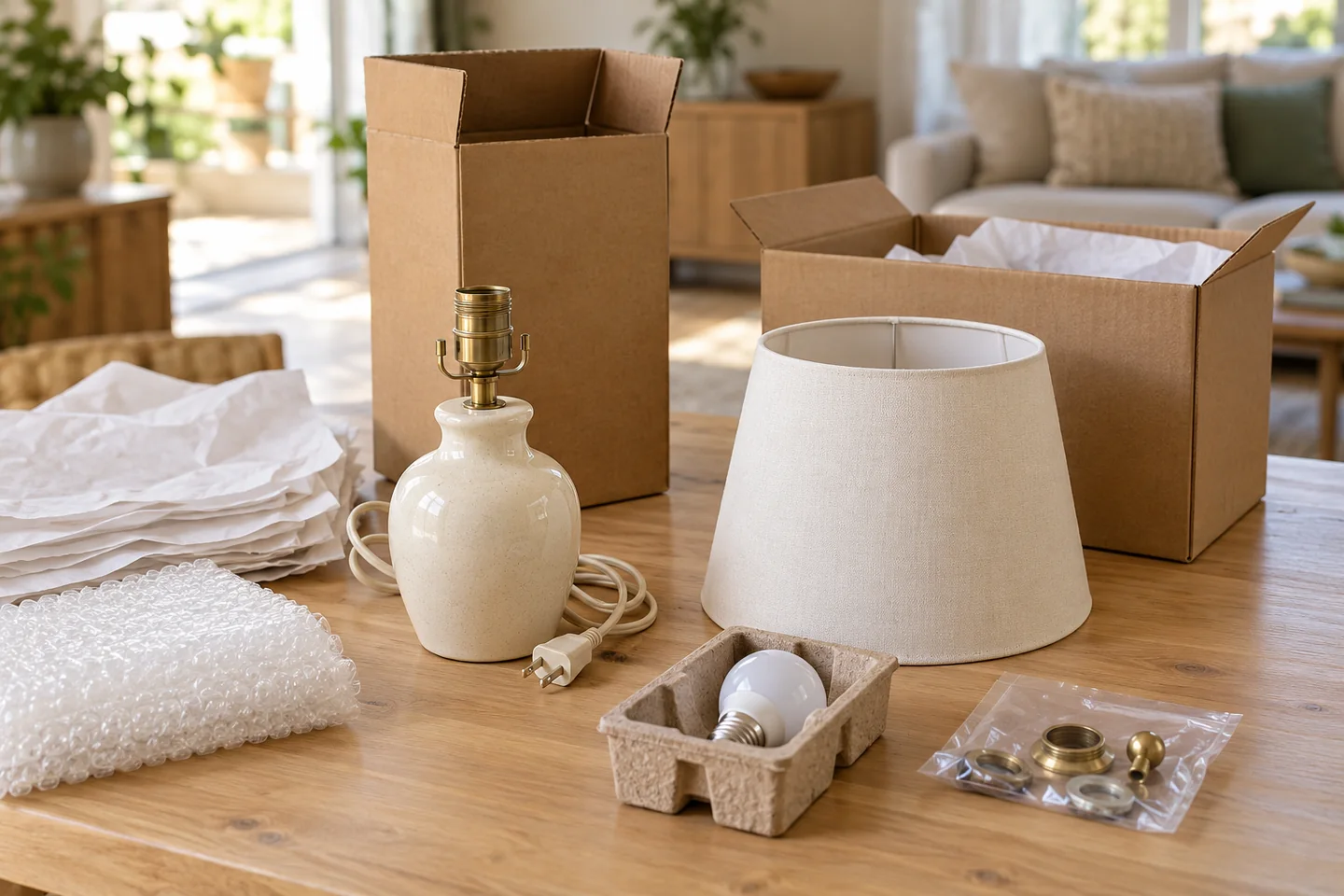
Prepare the lamp before wrapping it
To pack lamps for moving, unplug them, let bulbs cool, and separate the parts designed to come off. Wrap and support the base, give the shade its own carton, and keep bulbs and small fittings protected and identifiable. Choose packaging after measuring the parts with their protection in place.
Photograph the assembled lamp and any fittings you will remove. Record existing chips, cracks, or loose sections. Follow the lamp's instructions when removing the shade, bulb, harp, or decorative knob. Stop if a part resists or appears permanently attached; unnecessary disassembly can create a repair job.
This process concerns portable lamps. Hardwired fixtures and chandeliers need a separate removal plan with appropriate help. For an antique, stained-glass shade, or unusually valuable lamp, ask a specialist about handling and fitted packaging before taking it apart.
Choose cartons for the base and shade
Measure each part separately, including the base's widest point and any projection around the socket. Allow the space required by the chosen cushioning. A tall narrow lamp carton can suit some bases, but its dimensions still need to match your particular lamp. Check the carton supplier's assembly and loading instructions.
| Lamp part | Container choice | Protection to plan | Avoid |
|---|---|---|---|
| Table lamp base | Manageable carton with suitable height | Compatible wrapping and stable support | A socket pressed against the top flaps |
| Lampshade | Separate carton sized for its shape | Clean surface protection and gentle support | Other belongings pressing into the shade |
| Bulbs and small fittings | Original packaging or suitable small inner containers | Separation and identification | Loose hardware next to glass |
| Floor lamp sections | Packaging matched to the removable sections | Protected joints, ends, and finish | Forcing a fixed stem to bend or unscrew |
Gather materials before you start: clean unprinted paper, suitable cushioning, packing tape, a marker, and small bags or containers for fittings. Keep the work surface clear enough to support the lamp and shade without balancing them on the edge of a table.
Wrap and stabilize the lamp base
A ceramic or glass base needs protection suited to its vulnerable edges and surface. Choose a compatible layer against the finish and add cushioning around it. Keep packing tape on the wrapping rather than directly on a painted, plated, or otherwise sensitive surface.
Gather the cord loosely and secure it without pulling on its connection to the lamp. Protect the plug so it cannot scratch the base, and keep it from bearing against a fragile part. Do not create a tight cord bundle around a thin stem or projecting fitting.
- Assemble a sound carton and prepare the required cushioned base.
- Place the protected lamp in its intended orientation, usually upright for a suitable base and carton.
- Support the sides with compatible packing material so the base cannot slide.
- Protect the socket and projections without using them to carry the load.
- Check that the carton closes naturally and that the packed weight is manageable.
If more than one base shares a carton, wrap and separate them so they cannot touch. Reconsider the arrangement if it becomes heavy or leaves one lamp leaning against another. Packing two lamps together is useful only when the carton and protection suit both.
Pack lampshades without compressing them
Set the shade in its own clean carton. Use suitable plain paper or another compatible material to protect its surface. Printed newspaper can leave marks. Keep the shade's shape supported and avoid forcing packing material against fabric, ribs, or a delicate covering.
Give the shade enough clearance to avoid pressure from the carton walls and top. Keep lamp bases, books, tools, and small hardware out of its carton. If the shade shifts, adjust the support or carton choice carefully rather than cramming the open spaces full.
Pack shades individually unless their construction and the packing guidance allow safe nesting with separation. A glass or fragile decorative shade needs its own protection method and may need professional packing. Mark the finished carton clearly so nobody mistakes its light weight for space to add other belongings.
Keep bulbs, fittings, and cords identifiable
Use intact original bulb packaging when it is available and appropriate. Otherwise choose protective packaging that keeps bulbs from contacting one another or the sides of a loose hardware container. Label the bulb package with the lamp it belongs to and keep it out of a carton where heavy contents can crush it.
Put the harp, finial, and other removable fittings in an identified bag or small container, with any protection needed for their finish or projections. Record which package holds them. A note such as 'Living room lamp 2: fittings in accessories box 4' makes the parts findable without reopening every carton.
Check your mover's rules for the bulb types you intend to transport. If you decide not to keep a bulb, use the disposal or recycling route for its type in your area. Keep damaged bulbs out of ordinary packing rather than trying to wrap them as if they were intact.
Plan the load and the first setup
Label base and shade cartons with the room, lamp number, and handling information. Add the correct orientation where needed. Keep shade boxes away from heavy stacks and arrange the vehicle load so neither the lamps nor their cartons are pressed by shifting furniture.
For a floor lamp, follow its assembly instructions when separating sections. Protect exposed ends and keep matching hardware together. Measure the carrying route for a lamp that remains assembled, and arrange appropriate help if the shape is difficult to control.
At the new home, compare the parts with your condition photos before reassembly. Inspect the cord, plug, socket, and base. Keep the lamp unplugged if you find damage that needs checking. Reassemble according to its instructions and place it on a stable surface before use.
Add lamp protection to your supply plan
Count bases and shades separately when shopping for cartons. Add bulbs and fittings to the accessories list. Use BoxCount Planner for the move's general supply range, then record the lamp-specific cartons and protection your measurements require. A room count alone cannot determine the packaging for a tall or unusually shaped lamp.
- Lamps are unplugged and bulbs have cooled before preparation.
- Only parts intended to be removable have been detached.
- Bases, finishes, sockets, and plugs have suitable protection.
- Each shade has a carton that closes without compressing it.
- Bulbs and small fittings are protected and linked to the correct lamp.
- The loading position and arrival inspection have been planned.
Use the calculator for a personalized starting estimate. Exact needs vary, so adjust it after you take inventory.
Use the moving supplies calculator