How to Protect Furniture When Moving
Protect large furniture with a clear inventory, clean padding, careful wrapping, and a safer route from room to truck.
Start with an inventory and a few photos
Furniture damage usually starts before the truck arrives. Walk through the home and list every large or fragile piece: sofas, beds, dressers, tables, chairs, bookcases, mirrors, televisions, and anything with a glass panel. Note the room, approximate dimensions, condition, and any existing mark. Take photos of each item from several sides, including close-ups of scratches, dents, seams, and hardware. Those photos give you a useful record before anything is wrapped and make reassembly easier later.
Measure tall, wide, and awkward pieces, then check the route from the room to the vehicle. Include door openings, stair turns, elevator interiors, and narrow hallways. A piece that fits in the room may still need its legs, doors, or shelves removed before it can make the turn.
Disassemble only what should come apart
Disassembly reduces width and makes many pieces safer to carry, but do not take apart a joint that is glued, delicate, or difficult to restore. Remove table legs, bed rails, shelves, mirrors, and other parts when the construction makes that reasonable. Photograph each stage before removing a fastener. Put screws, washers, brackets, remote controls, and keys in a labeled resealable bag and attach it to the furniture or place it in a clearly marked hardware box.
- Empty drawers, cabinets, and shelves before lifting. Their contents add shifting weight and can damage the frame.
- Remove shelves and wrap them separately when they can slide or strike the cabinet walls.
- Secure doors and drawers so they cannot swing open, but do not tape directly to a finished surface.
- Keep bolts and fittings with the exact piece they belong to, not in one unmarked container.
- Ask for help with heavy sections rather than twisting a frame through a doorway alone.
Choose the right wrapping materials
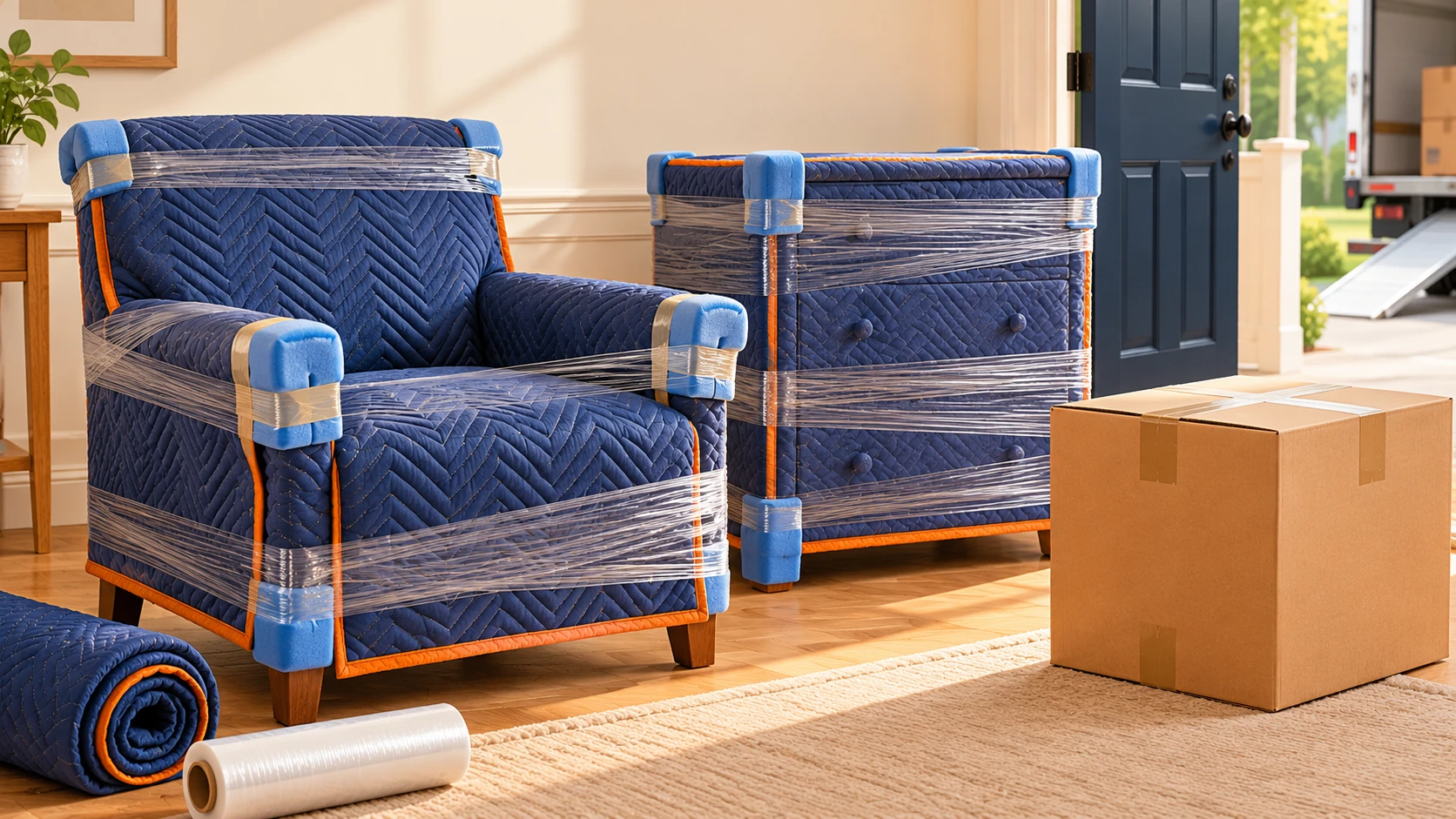
Furniture blankets or moving pads are the main layer for finished surfaces. They cushion contact with door frames, floors, and other items while allowing the piece to be handled. Use clean paper or soft packing material for smaller surfaces and bubble wrap for glass, delicate trim, or vulnerable corners. Cardboard corner protectors can shield sharp edges; they work best under a blanket rather than as the only protection.
Stretch wrap is useful for holding a blanket in place and keeping drawers or doors closed. Wrap the blanket, not the bare wood, leather, or painted finish. Tight plastic pressed directly against a surface can trap moisture, transfer texture, or leave residue when the item sits in warmth. Use enough tension to hold the protection, not to compress the furniture.
- Furniture blankets or pads for broad finished surfaces
- Stretch wrap for securing blankets and closed drawers or doors
- Cardboard or foam corner protection for edges and protruding trim
- Packing paper and bubble wrap for glass, hardware, and small fragile parts
- Resealable bags, labels, marker, tape, and a measuring tape
- A dolly, straps, or sliders only when the route and helpers make them safe to use
Protect corners, edges, and vulnerable surfaces
Corners take the first contact in a doorway and the first pressure in a stack. Cover them with foam, folded cardboard, or a thick pad, then secure the protection under the furniture blanket. Pay extra attention to table corners, chair arms, bedposts, cabinet feet, and thin decorative edges. Do not use a hard protector that can scratch the finish when it moves underneath the blanket.
Use a different approach for wood, glass, fabric, and leather
| Box | Common dimensions | Good for | Weight note |
|---|---|---|---|
| Wood | Blanket + edge padding | Clean, dry protection around finished surfaces; empty drawers and cabinets | Do not tape or wrap bare wood tightly for a long hold |
| Glass | Soft layer + rigid protection | Protect the face, edges, and corners; keep separate from hard contact | Mark clearly and avoid pressure from cartons or straps |
| Upholstery | Clean pad + breathable outer layer | Cover against dust and contact; keep fabric dry before wrapping | Do not compress cushions or trap dampness |
| Leather | Soft blanket, loose protection | Keep surfaces clean and dry; avoid direct plastic against the leather | Prevent scuffs, heat, and prolonged moisture contact |
| Mattress | Mattress bag or clean cover | Seal against dirt while keeping it dry and supported on its edge | Do not drag it across wet ground or sharp corners |
Move through doors, stairs, and tight turns
Clear the route before the first lift. Remove small rugs, lamps, boxes, and loose objects; hold doors open; and protect a vulnerable wall or banister if the route requires it. Measure the widest protected part of the furniture, not just the bare frame. Blankets and corner guards add width, and that extra inch can change the plan.
Use two people for pieces that are long, heavy, or difficult to see around. One person should call the movement while the other watches corners and the path behind the item. Keep hands away from pinch points, take stairs slowly, and never use a strap or dolly setup that leaves the load unstable. If a piece must be tilted, check that drawers, doors, shelves, and loose parts cannot open or slide.
Load furniture so it stays supported
Load large, stable furniture so it cannot slide, tip, or crush smaller belongings. Keep finished surfaces separated with blankets and use straps against sturdy structural points, never against fragile trim or a glass panel. Place heavy pieces low and distribute weight across the floor. Keep boxes and loose tools from rubbing against wrapped furniture during transit.
- Stand sofas and mattresses only when their construction and protection allow it; support them so they cannot fall.
- Keep glass, mirrors, and televisions away from pressure and never use them as a wall for heavy boxes.
- Do not stack dense cartons on upholstered pieces, cushions, or a fragile table surface.
- Leave a clear path to the items that must come off first, including the first-night box and essential furniture.
- Label wrapped pieces by destination room and add notes such as TWO-PERSON LIFT or KEEP UPRIGHT when needed.
Account for rain, cold, heat, and moisture
Weather changes the protection plan. Keep blankets and cardboard dry, cover furniture while it waits outside, and avoid setting wrapped pieces on wet pavement. If an item gets damp, remove sealed plastic when practical, move it to a dry ventilated area, and let it dry before long-term wrapping. Do not load a wet mattress or upholstered piece and hope the truck will solve the problem.
Plastic can protect against a brief shower, but it should not become a tight, long-term layer around wood, upholstery, or leather. On a hot day, store wrapped furniture out of direct sun when possible. On a cold or damp move, allow materials and surfaces to acclimate before placing them tightly against a wall or another item.
Inspect while you unpack
Unwrap furniture in a clean, reasonably dry area and compare it with the photos and inventory. Check corners, legs, hardware, drawer fronts, glass, seams, and upholstery before moving each piece into its final position. Keep damaged blankets and packaging nearby until the inspection is complete. If you find new damage, photograph it in place and record the item, location, and condition before cleaning or repairing anything.
Reassemble one piece at a time. Use the labeled hardware bag and your photos. Make sure shelves are seated, doors are aligned, and drawers move normally before loading them.
Common furniture-protection mistakes
- Wrapping bare wood, leather, or painted surfaces tightly in stretch wrap for an extended period.
- Using dirty blankets that transfer grit or odors to upholstery and finished surfaces.
- Leaving drawers, shelves, or doors full because the piece seems stable in the room.
- Taping directly to a finish or using a hard corner protector without a soft layer underneath.
- Skipping measurements because the furniture fit through the old doorway.
- Dragging protected furniture across wet ground, stairs, or a sharp threshold.
- Stacking heavy boxes against glass, screens, upholstered pieces, or delicate trim.
- Mixing hardware from several pieces in one bag and expecting to identify it later.
Final furniture checklist
- Inventory every large, fragile, and valuable piece and photograph its condition.
- Measure the furniture and the protected route through doors, stairs, and elevators.
- Empty drawers and cabinets; remove shelves, legs, doors, or rails when appropriate.
- Bag, label, and attach every set of hardware, cords, remotes, and loose parts.
- Wrap broad surfaces with clean furniture blankets and protect corners and edges.
- Use stretch wrap around the blanket rather than directly against sensitive finishes.
- Keep wood, glass, upholstery, leather, and mattresses dry and protected for their materials.
- Load heavy pieces low, secure them at structural points, and keep fragile items away from pressure.
- Inspect, photograph, and record condition before unpacking is fully finished.
Large furniture, fragile items, and televisions can change the supply mix. Use BoxCount Planner to get a starting estimate for blankets, stretch wrap, bubble wrap, tape, and boxes, then revise it after your inventory. Estimates vary because homes differ in furniture size, route, weather, packing choices, and available help.
Use the calculator for a personalized starting estimate. Exact needs vary, so adjust it after you take inventory.
Use the moving supplies calculator