Moving Day Essentials Checklist
Keep personal essentials, documents, tools, arrival tasks, and unpacking priorities separate from the packing supplies on moving day.
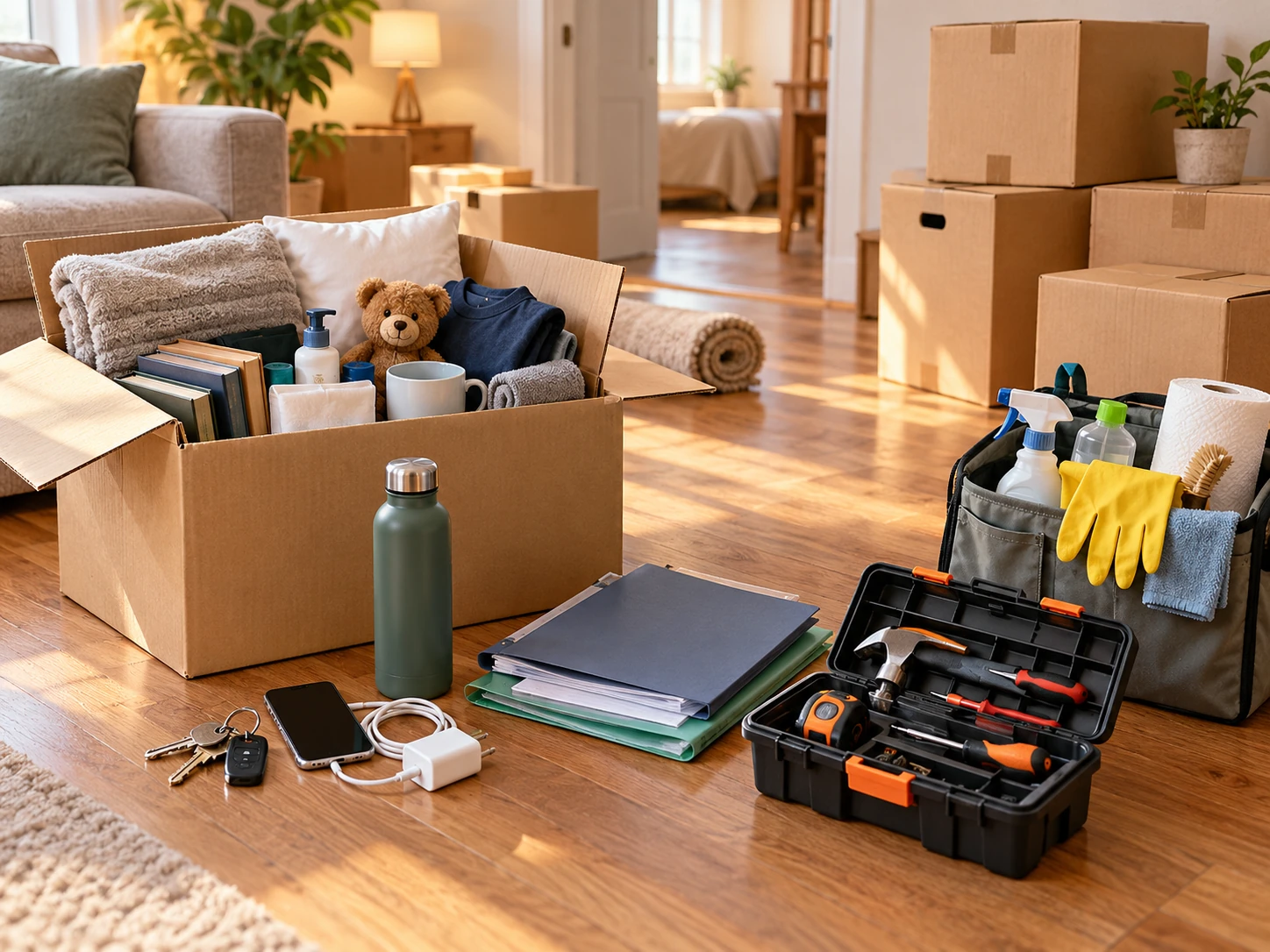
Set aside the essentials the night before
The night before, separate a personal bag and first-night box from anything going on the truck. Keep them in a labeled, off-limits place. Packing supplies prepare belongings; personal essentials get people through the day.
- Charge phones, battery packs, and any device used for navigation or communication.
- Set out medication, glasses, contacts, toiletries, and a change of clothes.
- Pack water, simple food, pet supplies, and anything a child needs during the move.
- Put keys, documents, wallets, jewelry, and other valuables in a personal bag.
- Keep cleaning supplies and basic tools accessible instead of burying them in the truck.
Documents, keys, and access details
Keep the moving agreement, inventory notes, contacts, identification, and property paperwork in a waterproof or secure digital folder. Save old and new addresses for deliveries, utilities, and building questions.
- Keys, garage remotes, gate codes, mailbox keys, and access fobs for both homes.
- Mover or helper contact information, arrival window, parking instructions, and elevator details.
- A simple list of rooms and special handling notes for furniture, fragile boxes, and valuables.
Hand keys and documents directly to the person responsible for them. Do not place them inside a carton, even if the carton is labeled clearly.
Phone, chargers, medication, water, and food
Your phone is a map, contact list, camera, payment tool, and emergency contact. Fully charge it, then pack the wall and vehicle chargers, battery pack, and compatible cables. Keep medication in your personal bag, not a bathroom box that may be loaded early, and follow its usual storage instructions.
Pack no-kitchen food: water, snacks, sandwiches, fruit, or other familiar options. Bring a cooler when food or medication needs temperature control; do not assume a nearby restaurant will be open.
Cleaning supplies and basic tools
A small cleaning kit handles the last wipe and first cleanup: trash bags, cloths or paper towels, suitable cleaner, a broom or dustpan, and gloves. Keep cleaners closed and away from food, medication, and electronics; never mix products.
| Box | Common dimensions | Good for | Weight note |
|---|---|---|---|
| Cleaning kit | Small tote or bucket | Trash bags, cloths, paper towels, cleaner, gloves, broom or dustpan | Keep upright and separate from personal items |
| Tool kit | Small handled case | Screwdriver, pliers, adjustable wrench, utility knife, measuring tape, flashlight | Carry it yourself or assign one person |
| Packing supplies | Accessible carton | Tape, labels, marker, paper, wrap, and spare cartons | This supports packing; it is not a personal essentials kit |
Tools handle door hardware, loose handles, furniture assembly, carton opening, and quick measurements. Keep sharp tools closed and with an adult.
Build a practical first-night box
Ask what you would need if unpacking stopped after the last trip. Pack toilet paper, soap, towels, bedding, pajamas, outfits, toiletries, a charger, simple food, and rubbish bags. Anything needed before bedtime belongs here, not in a numbered room carton.
- Bedding for the people arriving first, including a pillow or sleeping alternative.
- Toothbrushes, soap, toilet paper, towels, and basic personal care items.
- A few changes of clothes and comfortable footwear.
- A simple meal, snacks, water, cups, utensils, and a way to prepare them.
- Pet food, bowls, litter or cleanup supplies, and a familiar comfort item.
- A marker, tape, scissors or utility knife, and a small flashlight for late unpacking.
Children, pets, valuables, and weather
For children and pets, arrange a safe room, sitter, family member, or pet-care option when possible. Pack familiar snacks, activities, comfort items, and required supplies. Secure pets during loading and unloading; keep children away from lifting paths and tools.
Carry cash, jewelry, papers, small electronics, sentimental items, and anything irreplaceable yourself, never in the truck. Check the forecast; prepare layers, rain or sun protection, and cold-weather gear. Keep cartons off wet ground and temperature-sensitive items within safe storage limits.
Coordinate movers or friends before the first box moves
Brief everyone on parking, the entry door, excluded items, heavy or fragile loads, and who answers questions. With movers, confirm the arrival window, payment, contact, access restrictions, and excluded items. With friends, assign jobs instead of letting everyone improvise.
- One person checks items off the inventory and directs boxes to the loading area.
- One person keeps the door, walkway, and stairs clear.
- One person handles keys, documents, valuables, children, or pets.
- The loading lead groups boxes by destination and keeps the first-night box out of the truck.
- Use a clear label and handling note for fragile, heavy, upright, or last-off items.
Complete the final walk-through
After the last load, check every room, cupboard, drawer, closet, attic, garage, balcony, shed, and storage space, including behind doors and under sinks. Close windows, handle appliances as planned, remove rubbish, and follow property instructions rather than assuming every utility should be switched off identically.
- All rooms, closets, cabinets, storage areas, and outdoor spaces are empty.
- The old home's keys, remotes, and access items are accounted for.
- Doors and windows are secured, and the agreed cleaning is complete.
- No personal bag, document folder, medication, tool, or charger was left behind.
- The new-home access plan and destination for the first-night box are confirmed.
Check utilities, meters, and arrival conditions
Record meter readings and photograph them where the property or provider expects it. Confirm electricity, water, heating or cooling, and internet arrangements. Include the date and location with each photo. Report unavailable utilities; do not improvise unsafe connections.
At the new home, check the route before directing boxes inside: stairs, narrow turns, wet floors, elevator rules, and a carton area that does not block exits. This prevents an arrival bottleneck.
Arrival essentials and unpacking priorities
When the truck arrives, direct items by function. Put beds or sleeping supplies in place, set the first-night box somewhere obvious, keep tools and cleaning supplies available, and make one bathroom usable. Clear a path before opening decorative cartons.
- Make sleeping spaces usable before chasing a perfect room arrangement.
- Set up one bathroom with toilet paper, soap, towels, and medication access.
- Unload food and temperature-sensitive items promptly and store them safely.
- Open the first-night box, chargers, tools, and cleaning kit before ordinary cartons.
- Use labels to place boxes in their destination rooms instead of building a central pile.
The goal is not to finish every room on arrival; make the home safe and functional so tomorrow's unpacking is easier.
Common moving-day mistakes
- Packing keys, medication, chargers, or documents into a carton that goes on the truck.
- Treating packing supplies as a substitute for personal essentials such as food, water, or bedding.
- Leaving cleaning supplies and tools buried under cartons.
- Failing to tell helpers which boxes are fragile, heavy, upright, or needed first.
- Forgetting closets, outdoor storage, meters, remotes, or a final photo record.
- Assuming weather will cooperate and having no dry, safe place for cartons.
- Starting with decorative boxes before setting up a bathroom, bed, and basic food.
- Relying on one person’s memory instead of a short checklist and named responsibilities.
Final printable checklist
- Night-before bag and first-night box are packed and kept separate.
- Documents, keys, access codes, medication, valuables, phones, and chargers are with the responsible person.
- Water, food, children’s items, and pet supplies are ready.
- Cleaning kit, tools, labels, tape, and safe opening tools are accessible.
- Movers or friends have the arrival plan, parking details, handling notes, and contact number.
- Weather, clothing, walkways, stairs, doors, and elevator access have been considered.
- Final walk-through covers every room, storage space, appliance, window, key, and remote.
- Meter readings and arrival utility checks are recorded where needed.
- Beds, one bathroom, food, and the first-night box are the unpacking priorities.
Print this list or save it to your phone, then assign each item to a person. A checklist works best when it has an owner and a place to be checked off.
Use BoxCount Planner for supply readiness
BoxCount Planner covers the supply side of moving day. Enter home details, belongings, books, fragile items, wardrobe clothing, special items, and distance for a starting range of boxes and protective materials. It complements—not replaces—your essentials list and helps prevent shortages of cartons, tape, paper, or wrap.
Run the calculator before shopping, compare it with what you have packed, and adjust inputs as inventory changes. Keep a modest reserve. Supplies make packing possible; personal essentials make the day manageable.
Use the calculator for a personalized starting estimate. Exact needs vary, so adjust it after you take inventory.
Use the moving supplies calculator