Room-by-Room Packing Checklist for Moving
Follow a practical room sequence, group boxes by destination, and keep first-night essentials easy to find.
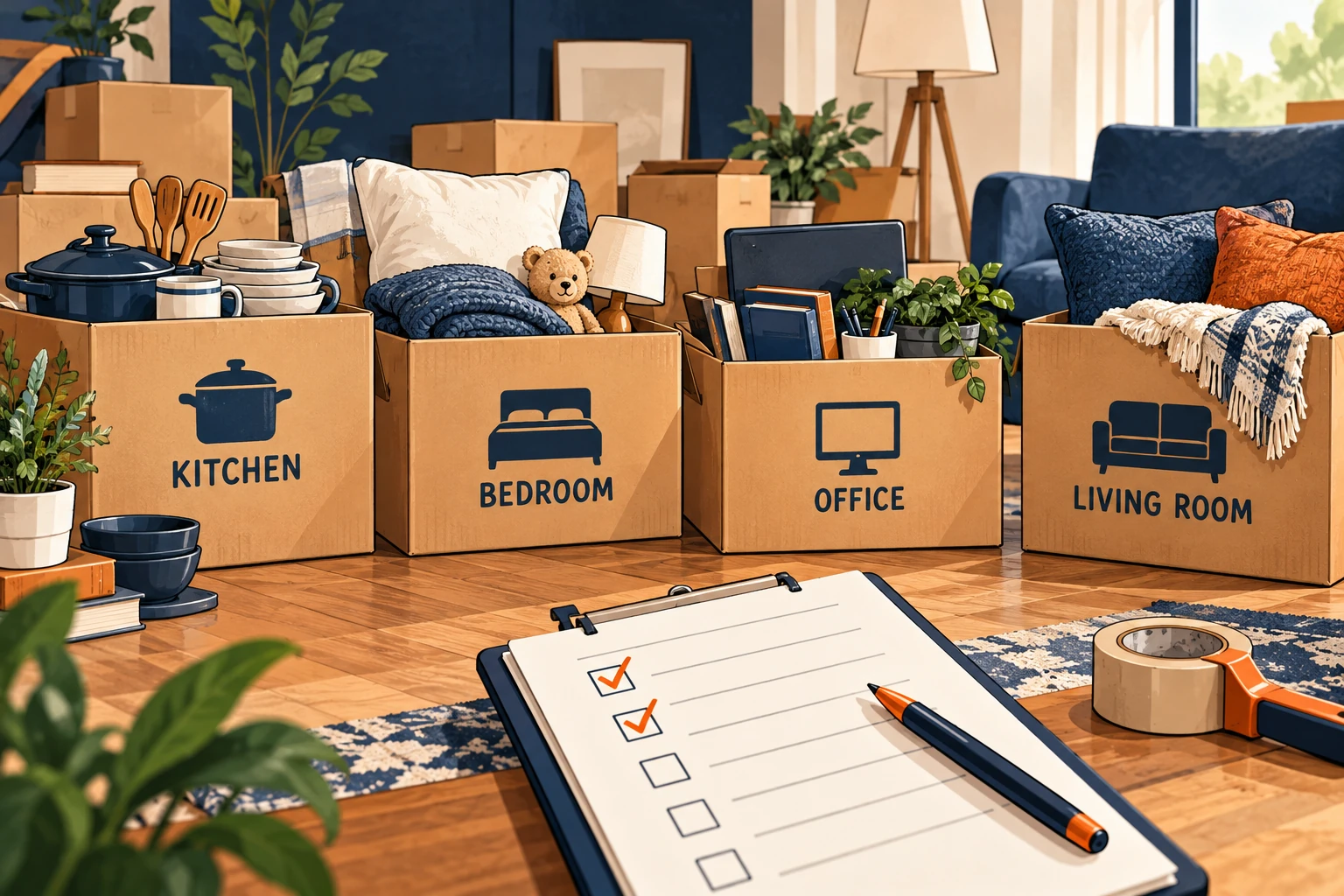
Make the sequence do the sorting
A room by room packing checklist follows the way you use the home. Start with spaces that are easy to finish and rarely needed, then move toward rooms that support daily life. Before opening a carton, decide what you are keeping, donating, recycling, or discarding.
Pack one category at a time, finish the box, and label it before starting another. Use sort, protect, pack, test, label. Keep a note with the room, box size, broad contents, and handling instruction so you can adjust supplies from evidence.
Entryway, closets, and storage areas
Begin at the edges of the home: entryway cabinets, coat closets, linen storage, guest rooms, and seasonal bins. These spaces are often low-risk because they contain items you can live without for a while. Empty one shelf or closet at a time so donation and trash decisions do not get mixed into packed cartons.
- Pack coats, off-season shoes, luggage, spare linens, decorations, and rarely used household supplies first.
- Keep keys, documents, tools for disassembly, and the items needed for move-day access outside the packed boxes.
- Use small boxes for dense hardware or books and standard boxes for pillows, blankets, and light seasonal items.
- Label storage cartons with both the destination room and a specific note such as 'hall closet — winter coats.'
Do not hide the first-night supplies in a storage box. Reserve a visible tote or carton and keep it near the packing station until loading is complete.
Kitchen: dense, fragile, and used every day
Pack the kitchen in waves. Start with serving pieces, duplicate utensils, rarely used appliances, extra pantry goods, and anything you will not need before moving day. Leave one simple cooking setup, basic dishes, coffee or tea supplies, and the food you plan to use until the final pass.
- Use small boxes for canned goods, spices, knives, and other dense items; use medium boxes for dishes, cookware, and appliances.
- Wrap plates individually and place them on edge in a supported row. Fill all side and top gaps so the contents cannot shift.
- Pack liquids upright in sealed bags or bins, separate from paper goods and clothing. Do not move leaking or damaged containers.
- Empty, clean, and dry appliances; keep cords, lids, and small parts in labeled bags with the correct appliance.
- Follow manufacturer guidance for refrigerators, freezers, and other appliances rather than guessing about transport preparation.
Living room: protect the mix
Living rooms combine books, artwork, electronics, décor, furniture, and soft furnishings, so divide the work by risk. Pack books and media in small boxes, décor and cables in medium boxes, and cushions, throws, and lampshades in standard cartons. Keep electronics and their accessories together, and photograph connections before unplugging them.
- Wrap framed art and mirrors around faces, corners, and edges; do not let heavy cartons press against them.
- Put remotes, cables, and small hardware in labeled bags attached to the related item or placed in its destination box.
- Use clean blankets or pads for furniture surfaces and protect the route through doorways, stairs, and hallways.
- Measure unusually large furniture before loading and plan the carry before smaller boxes block the path.
Leave the furniture layout and daily entertainment items until the room is nearly finished, but do not bury the remote, charger, or device you still use.
Bedrooms: clothing, bedding, and personal essentials
Pack bedrooms by season and frequency of use. Start with off-season clothes, extra bedding, shoes, accessories, and nightstand items you will not need. Keep a small working wardrobe out until the final packing day. A wardrobe box is useful for hanging clothes, while folded clothing and shoes usually fit better in medium boxes.
- Keep hanging clothes on hangers in wardrobe boxes without overloading the bar.
- Use standard boxes for pillows, comforters, and light bedding; use medium boxes for folded clothes and shoes.
- Protect jewelry, medication, documents, and other personal valuables separately rather than leaving them in a general carton.
- Label children’s or shared-room boxes with the exact room and a short contents note so unpacking can begin in the right order.
- Pack sheets, towels, pajamas, and a change of clothes in the first-night box, not in the last anonymous bedroom carton.
Bathrooms: small items, leaks, and the last-minute pass
Bathrooms are usually packed late because they remain in use. Begin with backup toiletries, spare towels, decorative items, and unopened products you have decided to keep. Place bottles upright in sealed bags or plastic bins, and separate liquids from paper products, clothing, and electronics.
- Discard expired, leaking, or unidentified products instead of paying to move them.
- Use small or medium boxes for toiletries, towels, and grooming tools; keep the carton liftable and easy to inspect.
- Protect sharp grooming tools and place batteries or loose accessories where they cannot damage other items.
- Leave toilet paper, hand soap, medication, towels, and basic hygiene items in the first-night box.
- Clean and dry the final bathroom items before sealing them so dampness does not spread through a carton.
If you are moving hazardous cleaners or chemicals, check the product label and the moving company's rules. Do not assume every household chemical is safe to transport in a general moving box.
Home office: keep work and records findable
The office needs a continuity plan as much as a packing plan. Decide which computer, documents, chargers, and work materials must remain available until the move. Back up important files before disconnecting equipment, and photograph cable connections so reassembly is less frustrating.
- Pack books and paper in small boxes and office supplies in medium boxes; avoid creating cartons that are dense and difficult to lift.
- Use original packaging for computers or monitors when available, or cushion corners and screens with non-abrasive material.
- Keep documents, identity records, medications, and irreplaceable information with you when possible.
- Label cables and accessory bags by device, not just by room, so a box labeled 'office' is still searchable.
- Pack a small work kit separately if you may need internet, a charger, or a document during the move.
Garage, basement, attic, and other storage
Storage areas should be included in the inventory before you trust a box estimate. Work in short sessions and separate tools, seasonal goods, sports equipment, gardening supplies, and items that are unsafe or no longer useful. Clean dust from objects before packing and reject cartons weakened by dampness or pests.
- Use small cartons for hardware, hand tools, and dense parts; use larger cartons only for light, bulky equipment.
- Wrap sharp edges and keep blades, hooks, and pointed tools from reaching the box walls.
- Drain fuel and follow the equipment's instructions for lawn tools, generators, and other powered items.
- Keep paint, chemicals, propane, ammunition, and other regulated or hazardous materials out of ordinary cartons and verify disposal or transport requirements.
- Label seasonal bins by destination and contents so they do not become anonymous storage in the new home.
Group boxes and label them for the unload
Group boxes by destination room, not just by the order in which you packed them. Use a consistent label with the room, a short contents note, and a handling note such as HEAVY, FRAGILE, or LIQUIDS when it is genuinely useful. Write on two sides and the top so the label remains visible in a stack.
| Box | Common dimensions | Good for | Weight note |
|---|---|---|---|
| Dense | Small box | Books, pantry goods, tools, records, and hardware | Split the carton before it becomes awkward |
| Everyday | Medium box | Dishes, cookware, folded clothes, toys, and office supplies | Keep contents balanced and cushioned |
| Bulky light | Standard box | Bedding, towels, pillows, lampshades, and cushions | Use space without adding dense contents |
| Hanging | Wardrobe box | Clothes that should stay on hangers | Leave room around the bar and do not overload |
If a box contains two rooms, write both destinations and explain the split. Better still, keep the mix small. A clear label helps the unloading crew, but it cannot replace a stable carton or a safe lift.
Pack the first-night box separately
The first-night box is the one carton you should be able to identify without opening five others. Use a bright, large label on more than one side, keep it outside the main stack, and load it last so it comes off first. A tote can be easier than a cardboard box if you expect rain, stairs, or a long wait before unpacking.
- Chargers, medication, toiletries, toilet paper, hand soap, and towels
- A change of clothes, pajamas, basic bedding, and shoes for the next morning
- Water, snacks, coffee or tea supplies, simple dishes, and any child or pet essentials
- Scissors or a box cutter, tape, markers, a flashlight, and a small tool kit
- Paper towels, trash bags, cleaning cloths, and basic cleaning supplies
- Important documents, move-day details, and any accessibility items needed immediately
Keep valuables, identity documents, prescriptions, and irreplaceable items with you instead of assuming the moving load is the right place for them.
Use BoxCount Planner, then revise from reality
Use BoxCount Planner before shopping to estimate a starting mix of standard, medium, small, and wardrobe boxes plus tape, paper, bubble wrap, and related supplies. Enter home size, home type, square footage, people, belongings level, wardrobe clothing, books, fragile items, and moving distance. The calculator cannot see your closets or predict your packing style, so treat the result as a range rather than a promise.
After packing the first storage area or room, compare the actual box mix with the estimate. If small boxes disappear quickly, check books, pantry goods, tools, and dishes before buying more large cartons. If standard boxes are mostly empty, reserve them for light bedding and cushions. This small feedback loop makes the next purchase more useful.
- Choose the room sequence and pack low-use spaces first.
- Declutter before sealing cartons and keep donations out of the packing stream.
- Match box size to weight: small for dense, medium for everyday, standard for bulky light, wardrobe for hanging clothes.
- Label two sides and the top with destination, contents, and real handling notes.
- Keep fragile, valuable, hazardous, and first-night items on their own plan.
- Calculate a starting supply range, then adjust it after the first room reveals your actual mix.
Use the calculator for a personalized starting estimate. Exact needs vary, so adjust it after you take inventory.
Use the moving supplies calculator