Pack Room by Room Without Losing Track
Give every room a packing owner, every box a destination, and unfinished tasks a place to wait without taking over the house.
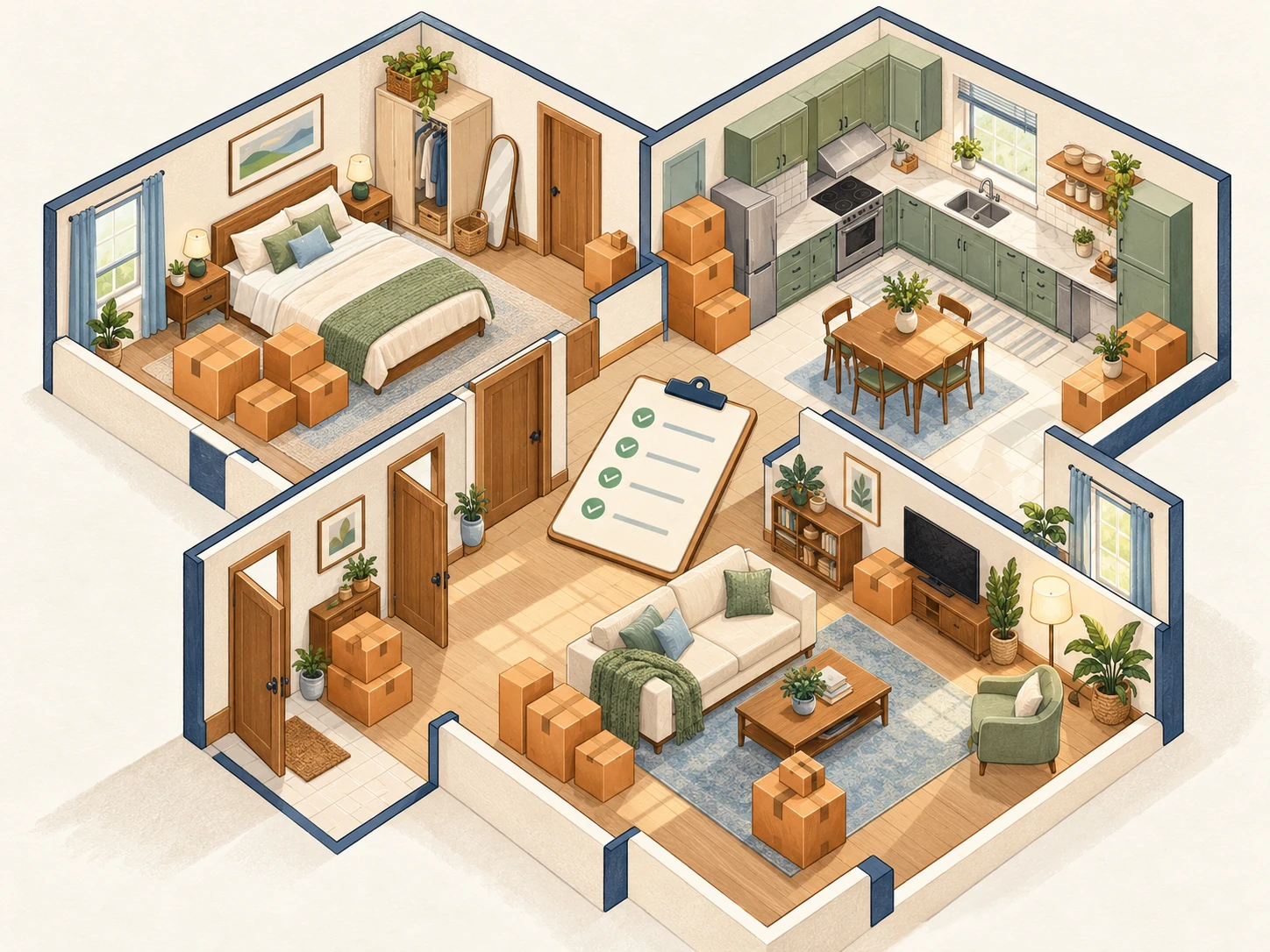
Choose the first room you can actually finish
To pack room by room, start with a space you use least, finish its nonessential belongings, and label its boxes before moving on. A spare bedroom or seasonal cupboard often works well. The kitchen usually needs several passes because meals continue while the rest of the home is being packed.
This guide handles the coordination: what counts as finished, where undecided items go, and how someone else can pick up the work tomorrow. For a list of what to pack in each space, use the related room-by-room packing checklist. Keep the same room names across both lists so a box never needs translating at the new home.
Name rooms for the home you are moving into
Walk through your current home and assign each group of belongings a destination. If the old dining room will become an office, label the desk accessories OFFICE from the start. Use PRIMARY BEDROOM and GUEST BEDROOM instead of BEDROOM when helpers need to distinguish them. A simple sketch of the new layout helps everyone agree on these names.
- List closets, the loft or attic, basement, garage, and any separate storage unit.
- Mark belongings that are going to storage or another address before packing them.
- Choose one clearly identified place for donations and items awaiting a decision.
- Keep a small essentials area for belongings that must stay in daily use.
Several old rooms can feed the same destination. A bookshelf in the living room and a desk in the bedroom may both belong in the new office. Record the old location in your private inventory if it helps you find things during packing; put the destination on the carton.
Use a short status list instead of relying on memory
Create a shared note with one line per room: destination, person responsible, status, sealed box numbers, and next task. Useful statuses are NOT STARTED, PACKING, ESSENTIALS ONLY, and CHECKED. ESSENTIALS ONLY means the nonessential belongings are packed but the room still contains things you use. CHECKED belongs to the final walkthrough after those last items leave.
Keep the note somewhere the whole household can reach. A paper copy beside the packing station works when phone batteries run low. If two people pack at different times, update it before leaving the room so the next person does not reopen finished cartons to discover what remains.
Finish a small zone within the room
An entire bedroom can be too much for one evening. Start with one shelf, one cupboard, or the contents of a single drawer. Put out only the cartons that zone needs. Sort what you are keeping, protect it, close the box, and write its label while the contents are still in front of you.
Leave a partially packed box open and clearly marked IN PROGRESS. Write what is already inside on a temporary note. Keep it away from the finished stack so nobody loads it by mistake. Avoid leaving several unmarked open cartons around the room; they make it difficult to tell packed belongings from loose items.
Give undecided objects a controlled place to wait
A room can stall over a cable nobody recognizes or a cupboard of shared belongings. Put those items in a small decision tray with a note naming the question and the person who can answer it. Keep the tray out of sealed cartons. Review it at the end of the session instead of carrying its contents into the next room.
When belongings need repair, specialist packing, or a different destination, record that action explicitly. For example, 'mirror: measure for a fitted carton' gives tomorrow's helper something useful to do. 'Sort later' leaves the whole decision unfinished. Keep screws and fittings with a label identifying the furniture they belong to.
Share the work without mixing the contents
Assign one person to make decisions for a room, even when several helpers do the wrapping. That person can answer where objects belong and which items stay out. Another helper can assemble cartons, bring paper, or record box numbers without having to decide whether a half-used drawer should be packed.
- Agree on destination names before helpers start writing labels.
- Keep one room's finished cartons together where space allows.
- Use the same box-number sequence or give each room its own prefix.
- Check with the room's owner before packing personal or shared belongings.
- Keep walkways and exits clear as the finished stack grows.
Reset the room before stopping for the day
At the end of a session, check labels against the inventory and return tape, markers, and scissors to the packing station. Gather loose paper for reuse and remove trash. Write the next task in enough detail that you can begin without surveying the room again.
Keep daily clothing, chargers, toiletries, and anything needed for work out of the finished stack. A room can look nearly empty and still need another packing pass. Leaving that pass on the status list prevents the bedside drawer or bathroom shelf from becoming a surprise on moving morning.
Close each room with a final check
- Open each cupboard and drawer, including shelves above eye level.
- Check behind doors, under furniture, and around sockets for cables.
- Pack the remaining daily-use belongings into their named bags or boxes.
- Confirm that every finished carton has a destination and a contents note.
- Record any belongings traveling separately from the moving load.
- Mark the room CHECKED only after the final walkthrough.
Run BoxCount Planner before the main supply purchase, then compare its range with what the first room actually used. Record cartons by size so a shortage of small book boxes does not become an order for more large ones. Keep the packing status note beside the supply checklist as you work through the remaining rooms.
Use the calculator for a personalized starting estimate. Exact needs vary, so adjust it after you take inventory.
Use the moving supplies calculator