Moving Packing Tips That Actually Save Time and Money
Choose useful supplies, protect fragile items, and label boxes clearly so packing creates less waste and unpacking takes less guesswork.
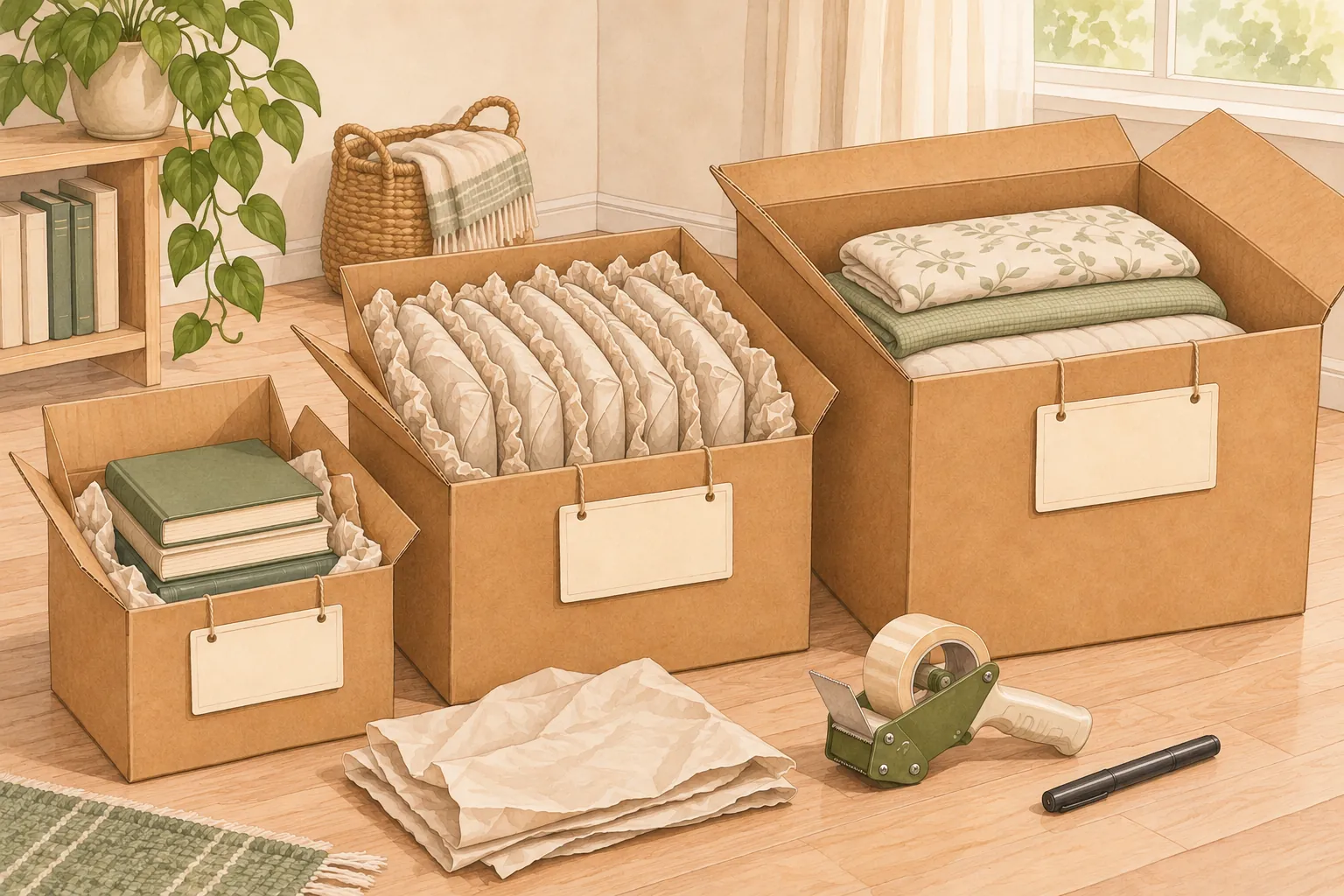
A box that is too heavy to carry has to be repacked. An unmarked carton has to be opened to find out where it belongs. Both jobs use time you could have saved when you first packed it.
The most useful moving packing tips help you make those decisions early: choose a manageable box, protect what goes inside, and leave a label someone else can understand. Start with the BoxCount Planner calculator for a supply range, then check it against your belongings. After packing your first room, revise the quantities before buying the rest.
Buy supplies after a quick inventory
Walk through closets, cabinets and storage areas before ordering a bundle of boxes. Separate what you are taking from what you can sell, donate or dispose of. Include the garage and any storage unit; they are easy to leave out of an estimate.
Next, count the usable supplies you already own or can borrow. BoxCount's editable checklist lets you enter those quantities and see what remains to buy. Its budget is illustrative, so compare your final list with current local prices, delivery charges and any return conditions.
Match the carton to its contents
Use small boxes for books, tools, canned goods and other dense items. Medium cartons suit many everyday belongings. Reserve large boxes for light, bulky things such as pillows and bedding. Check a seller's actual dimensions because size names vary between suppliers.
A larger carton does not make a heavy collection easier to move. Split the contents before the box becomes awkward to carry, even if some space remains. Our moving box size guide helps you choose the mix.
Use clean, dry secondhand boxes with intact seams and enough strength for their contents. Reject boxes that are damp, crushed or contaminated. Cross out old labels before adding yours. If you need more, start with the guide to finding free moving boxes.
Protect items from contact and movement
Plain packing paper separates dishes and fills gaps. Clean towels or linens can cushion suitable household items, provided they will not snag, stain or leave a hard object pressing against something delicate. Keep the towels you need on arrival out of the packing pile.
Use additional cushioning for vulnerable corners, glass edges and delicate parts. Bubble wrap does not replace a suitable carton or support around the item. Avoid printed newspaper against surfaces where ink could transfer.
Pack dishes and glasses individually
Wrap each dish before putting it in a sturdy carton with cushioning beneath it. One method recommended by Atlas Van Lines places wrapped plates vertically, like records, with crumpled paper above and below. Follow the instructions supplied with a fitted dish kit if you use one.
Keep glassware separated so rims, bowls and stems cannot knock together. Fill gaps gently without forcing pieces into place. Lowe's dish-packing guidance also recommends individual wrapping and material in the empty spaces to limit movement.
Close the flaps and give the carton a small, controlled tilt while supporting its base close to the floor. If you feel sliding or hear contact, reopen it and adjust the packing. A FRAGILE label helps with handling, but the contents still need support. For a fuller room plan, use our kitchen packing guide.
Seal boxes well and measure your tape use
Use tape intended for sealing cartons and follow its application instructions. On a standard slotted moving box, the H pattern covers the center seam and both edge seams. Seal the bottom before filling the carton, then seal the top once the contents are stable.
U-Haul's kitchen guide recommends the H method for added security. Firm contact with clean, dry cardboard matters. If the bottom bows or the seams pull apart, reduce the load or replace the box.
To estimate tape, assemble and seal one box of each size you expect to use. Measure the strips for both the top and bottom, including overlaps and any reinforcement. Multiply that measurement by the number of cartons of that size, add the totals, then divide by the length on the roll label. Round up and allow a modest reserve for mistakes.
Roll lengths and carton dimensions vary enough that a fixed number of boxes per roll can mislead you. The packing tape quantity guide explains the calculation in more detail.
Give furniture and electronics their own packing plan
Photograph furniture condition and cable connections before taking anything apart. Remove parts only as the manufacturer permits. Put screws and brackets in a labeled bag and record which piece they belong to. Keep that bag with the protected item or in a clearly indexed hardware container.
Use clean moving blankets to pad furniture. Compatible stretch wrap can hold blankets and loose protective layers in place. Check the finish and wrapping-product instructions before allowing plastic or adhesive to touch the surface, especially during storage or a long trip.
For electronics, use original fitted packaging when it is intact and suitable for moving. Otherwise, check the manufacturer's guidance and choose a carton with appropriate supports. Screens, mirrors and artwork need packaging that protects their specific shape and surface; a universal layer thickness will not suit every item.
Label each box before it leaves the room
Write the destination room and a short contents description on at least two sides and the top. Add an opening priority or handling note when it changes what a helper should do. Use the same room names at the new home, including a simple door sign if helpers might confuse bedrooms.
A useful label might read:
The room tells a helper where to carry it. The box number lets you keep a separate inventory, and the description helps you find the plates later. Mark the box as sealed in your list once the label is complete.
Color coding can help, but keep written room names too. Someone helping for the first time should be able to place a carton without learning a color key. See the moving box labeling guide for a more detailed system.
Separate personal essentials from the household load
Keep medications, important documents, keys, chargers and valuables in an accessible bag that travels with you. Add a change of clothes and toiletries for each person.
Prepare a separate first-night box with bedding, towels, toilet paper and a few basic kitchen items. Mark it OPEN FIRST and make sure it stays accessible. Tell helpers which bags and cartons are outside the main loading plan before they start carrying things away.
Follow a flexible packing order
Start with things you use least. Seasonal belongings, guest-room contents and spare linens can usually be packed before daily cookware or work equipment. Finish one small area and label its cartons before spreading supplies through the whole home.
Use this countdown as a planning example, adjusting it to your available time:
- About four weeks before: declutter, list special packaging needs and begin low-use storage areas.
- Two to three weeks before: pack secondary rooms, books you will not need and spare clothing.
- During the final week: finish most kitchen and bedroom packing while keeping daily essentials available.
- In the final 48 hours: check your personal bag, prepare the first-night box and finish the remaining small loads.
If the move is closer, keep the same order and shorten the sessions. A smaller household or professional packing service may need a different schedule. Our packing timeline gives you a more detailed countdown.
Check each carton before sealing it
- The bottom is securely sealed and the cardboard is sound.
- The load is manageable for the person carrying it.
- Hard or fragile items are separated and cannot slide into each other.
- The flaps close without bulging or pressing on the contents.
- The destination, contents and any handling note are visible.
- Personal essentials and the first-night supplies remain accessible.
Count the cartons and materials used after your first room. If you used more small boxes or more paper than expected, adjust that part of the list. Keep unused supplies organized so they are easy to find during the final packing session.
Estimate your moving boxes and packing supplies with BoxCount Planner, subtract what you already have, and use your first packed room to refine the next purchase.
Use the calculator for a personalized starting estimate. Exact needs vary, so adjust it after you take inventory.
Use the moving supplies calculator